Ming Xiaoling Mausoleum:A Journey Through 600 Years of Imperial Epic and the Mystical Realm of Stone Statuaries

Ming Xiaoling Mausoleum:A Journey Through 600 Years of Imperial Epic and the Mystical Realm of Stone Statuaries

Overview:One Mausoleum, Half of Ming Dynasty History
The Ming Xiaoling Mausoleum is located in Nanjing. It is the tomb of Zhu Yuanzhang, the founding emperor of the Ming dynasty, and a UNESCO World Heritage site. The Sacred Way out front dates back over 600 years, lined with enormous stone animal and human statues—a masterpiece of ancient Chinese stone carving.

Core Highlights at a Glance
Key Designations:Premier Imperial Mausoleum of the Ming and Qing Dynasties / One of the First Major Historical and Cultural Sites Protected at the National Level
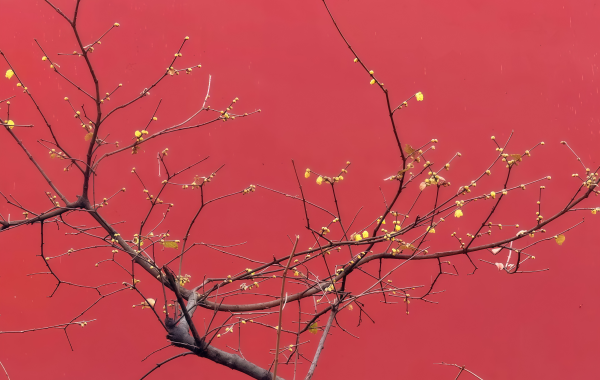
Core Experiences:Strolling the Sacred Way, Climbing the Square City and Ming Tower, Viewing plum blossoms, Capturing light and shadow against the red walls
Suggested Visit Duration:3–4 hours (excluding Plum Blossom Hill); recommended as part of a combined day trip with the Sun Yat-sen Mausoleum and Linggu Temple
Location:Within the Zhongshan Scenic Area, Xuanwu District, Nanjing, Jiangsu Province

  • Ming Xiaoling Mausoleum:A Journey Through 600 Years of Imperial Epic and the Mystical Realm of Stone Statuaries-1
  • Ming Xiaoling Mausoleum:A Journey Through 600 Years of Imperial Epic and the Mystical Realm of Stone Statuaries-2
  • Ming Xiaoling Mausoleum:A Journey Through 600 Years of Imperial Epic and the Mystical Realm of Stone Statuaries-3
  • Ming Xiaoling Mausoleum:A Journey Through 600 Years of Imperial Epic and the Mystical Realm of Stone Statuaries-4

Origins:The Ultimate Resting Place of a Founding Emperor

Furong Ancient Town Furong Ancient Town

The Land of the"Coiled Dragon"—Zhu Yuanzhang's Feng Shui Choice
The story of the Ming Xiaoling Mausoleum begins with the foresight and vision of an emperor who rose from humble commoner origins.As early as the second year of the Hongwu reign(1369),Zhu Yuanzhang had already begun the process of selecting his eternal resting place for the centuries to come.He ultimately settled upon this specific site at the southern foot of Purple Mountain—a location described as the"Coiled Dragon."Indeed,during the late Eastern Han Dynasty,when the strategist Zhuge Liang passed through Moling(present-day Nanjing),he famously marveled:"Purple Mountain coils like a dragon,and Stone City crouches like a tiger—truly a residence fit for an emperor."Purple Mountain features three distinct peaks—collectively referred to in Feng Shui theory as the"Three Peaks of the Imperial Canopy"—with the central peak holding the highest spiritual significance;the Ming Xiaoling Mausoleum is situated precisely to the south of this central peak,beneath the slopes of Wanzhu Peak.

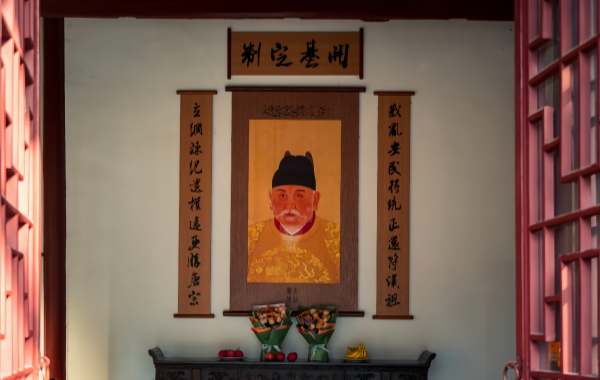
In the fourteenth year of the Hongwu reign(1381),construction on the Xiaoling Mausoleum officially began.Prior to this,Zhu Yuanzhang ordered the relocation and demolition of the Jiangshan Temple—an ancient Buddhist monastery dating back to the Southern Dynasties—and the stupa of the eminent monk Baozhi,both of which were situated within the designated mausoleum grounds,in order to clear the site for construction.The following year,Empress Ma passed away and was interred first;as her posthumous title was"Xiaoci"(Filial and Benevolent),the mausoleum was named"Xiaoling."In the thirty-first year of the Hongwu reign(1398),Zhu Yuanzhang died of illness;the underground palace was then opened to allow for his joint burial alongside Empress Ma.The entire Xiaoling complex took over thirty years to complete;the project was finally declared finished in the third year of the Yongle reign(1405),upon the erection of the"Stele of the Sacred Merits and Divine Virtues of the Great Ming Xiaoling Mausoleum."

The"True Hero"Who Guards the Tomb—The Inextricable Bond Between Zhu Yuanzhang and Sun Quan
The selection of the site for the Ming Xiaoling Mausoleum is accompanied by a legend that remains a popular topic of conversation to this day.During the construction of the Xiaoling,a small hill—known as Plum Blossom Hill(Meihuashan)—stood directly in front of the mausoleum palace;this site happened to be the burial place of Sun Quan,the Great Emperor of Eastern Wu during the Three Kingdoms period.The officials responsible for the construction proposed relocating Sun Quan's tomb,but Zhu Yuanzhang replied,"Sun Quan was a true hero in his own right;let him remain here to stand guard at my gates."Consequently,Sun Quan's tomb was preserved intact.As a result,the Sacred Way(Spirit Path)leading to the Xiaoling was routed around Plum Blossom Hill,adopting a unique,winding trajectory that distinguishes it as the only Sacred Way among all Chinese imperial mausoleums that does not follow a straight,linear alignment.This decision not only demonstrated Zhu Yuanzhang's magnanimity but also gave rise to the unique spatial layout of the Ming Xiaoling Mausoleum that we see today.

>In-Depth Exploration:Discover More World Cultural Heritage Sites >> [The Summer Palace]

Must-See Wonders:Imperial Grandeur and Masterpieces of Stone Sculpture

Furong Ancient Town Furong Ancient Town Furong Ancient Town Furong Ancient Town Furong Ancient Town Furong Ancient Town

Humanistic Ingenuity—An Exemplary Imperial Mausoleum Setting the Standard for Five Centuries
The architecture of the Ming Xiaoling Mausoleum constitutes a grand narrative woven from themes of power,ritual protocol,and artistic expression.

1.The Dismounting Archway and Guidance Zone:Imperial Majesty
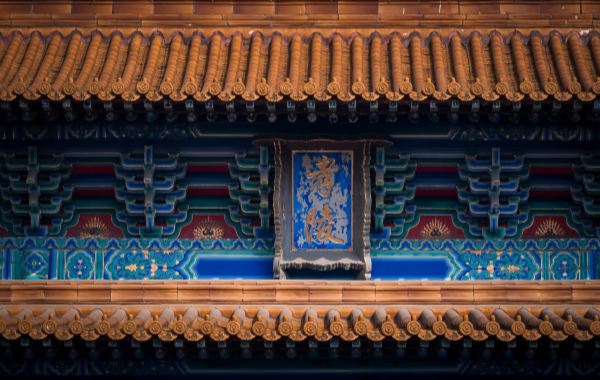
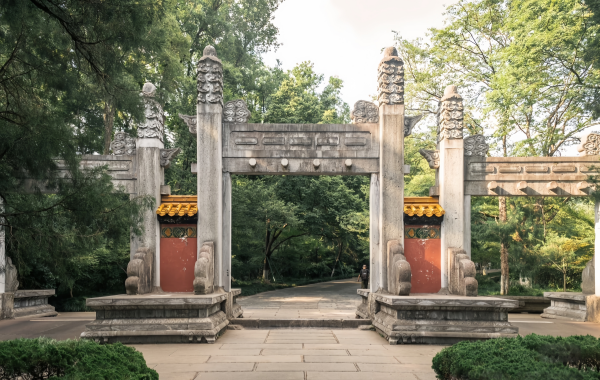
The official starting point of the Ming Xiaoling Mausoleum is the Dismounting Archway(Xiamafang),situated on the eastern slope of Weigang.This structure is a stone paifang(ceremonial archway)featuring two pillars that soar skyward;inscribed upon its horizontal lintel are six large characters in standard script(kaishu):"All Officials Must Dismount."Upon reaching this point,civil and military officials visiting the mausoleum were required to dismount and proceed on foot to demonstrate their reverence for the founding emperor.The processional way—stretching over 700 meters from the Dismounting Archway to the Great Golden Gate—sets a solemn stage for this imperial mausoleum.

2.The Pavilion of the Stele of Divine Merit and Sacred Virtue(The Square City):A Father-Son Bond
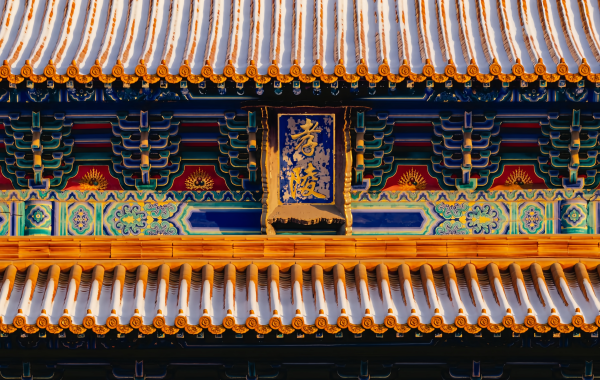
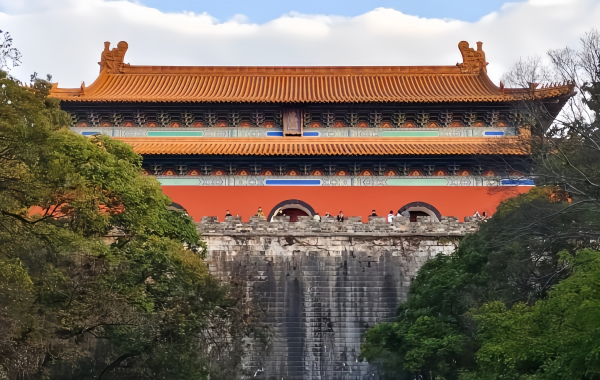
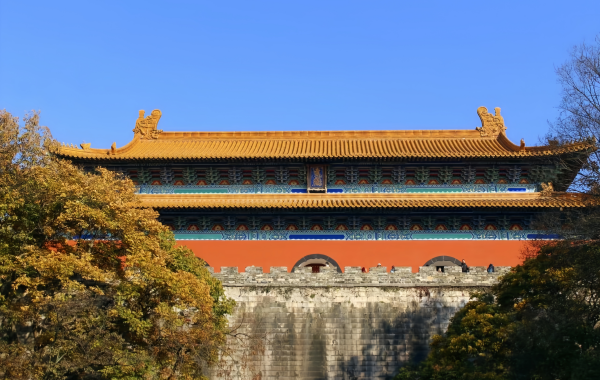
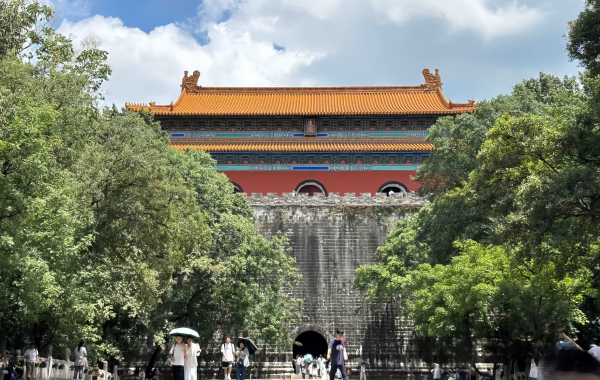
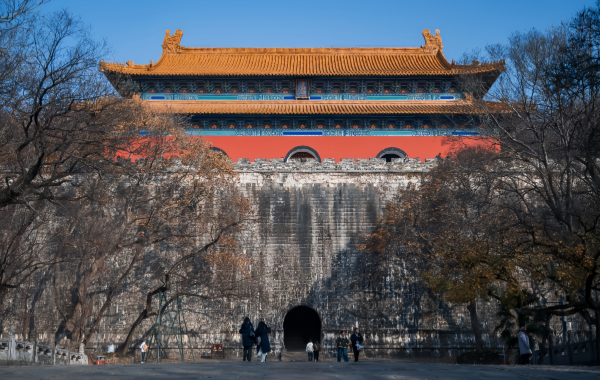
Inside the Great Golden Gate stands a square pavilion structure,popularly known as the"Square City."Although the pavilion's roof was destroyed long ago,its four walls still stand tall and imposing.Housed within is the"Stele of Divine Merit and Sacred Virtue of the Ming Xiaoling Mausoleum,"standing 8.78 meters high.It was erected by the Yongle Emperor(Zhu Di)to extol the virtues and achievements of his father,Zhu Yuanzhang.The inscription—penned personally by Zhu Di—recounts the lifetime accomplishments of Zhu Yuanzhang and serves as a vital primary source for the study of early Ming Dynasty history.

3.The Stone Elephant Road and the Wengzhong Road:An Open-Air Gallery of Stone Sculpture
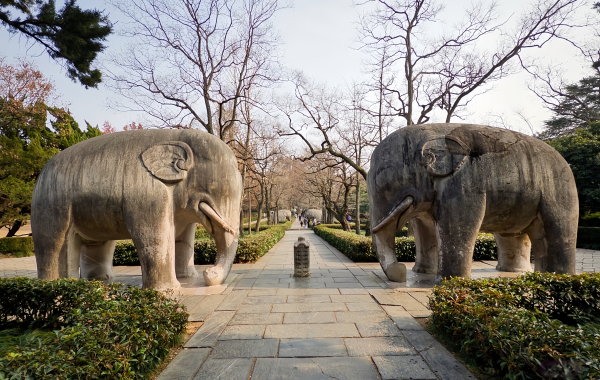
Crossing the Imperial River Bridge,one enters the most quintessential section of the Xiaoling Mausoleum:the Sacred Way.This processional route,spanning approximately 800 meters,consists of two segments—the Stone Elephant Road and the Wengzhong Road.Winding and curving along the contours of Plum Blossom Mountain,the path traces the distinctive pattern of the Big Dipper constellation.

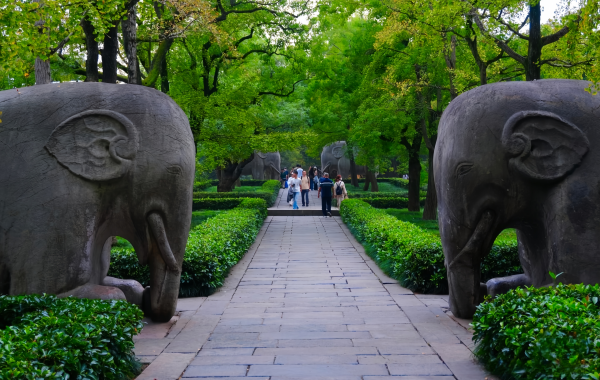
Lining the Stone Elephant Road are stone sculptures of six different animals:lions,Xiezhi(mythical justice beasts),camels,elephants,Qilin(mythical benevolent beasts),and horses.Arranged in pairs—two kneeling and two standing—there are two pairs of each animal type,totaling 24 sculptures across 12 pairs,standing guard on either side of the path.Each stone beast carries its own symbolic significance:the lion,as the king of beasts,signifies imperial majesty;the Xiezhi,known for its upright nature,represents the ability to discern right from wrong;the camel symbolizes the vast expanse of the Great Ming Empire's territory;the elephant,with its sturdy legs,signifies the stability of the realm;the Qilin,a benevolent creature,symbolizes a"benevolent and righteous ruler";and the horse represents the steed upon which the emperor rode to unify the empire.Among these sculptures,the stone elephants are the heaviest,weighing in at a staggering 80 tons each.During their original transportation,a remarkable feat of engineering was employed:the ground was watered in winter to create a frozen,icy surface,and the massive stones were rolled into place using bamboo and wooden rollers,powered entirely by human effort.

At the end of the Stone Elephant Road stands a pair of white stone ornamental pillars(Huabiao),towering 6.25 meters high;it is at this point that the Sacred Way turns northward.Upon entering the Wengzhong Road,one encounters eight stone statues standing opposite one another—four representing military generals and four representing civil officials.The generals are clad in armor and hold golden shields,while the officials wear court crowns and carry ceremonial tablets.The term"Wengzhong"originally referred to Ruan Wengzhong,a legendary strongman during the reign of Qin Shi Huang;it later evolved into a generic term for the stone figures guarding imperial tombs.A humorous anecdote from the Qing Dynasty recounts the story of a Hanlin scholar who mistakenly wrote"Wengzhong"as"Zhongweng."Emperor Qianlong playfully penned a satirical imperial rescript in response:"How can'Wengzhong'be inverted to'Zhongweng'?Ten years of arduous study,yet your scholarship remains deficient.You are no longer fit to serve in the Hanlin Academy;as punishment,you shall be demoted and dispatched to Jiangnan to serve as a lowly magistrate."

4.The Square City,the Ming Tower,and the Treasure Mound:A Revolutionary Transformation in Tomb Architecture
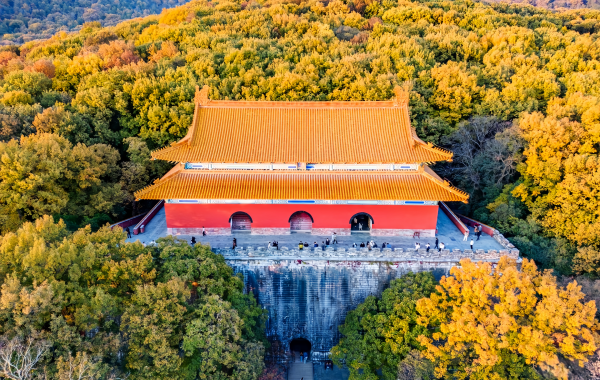
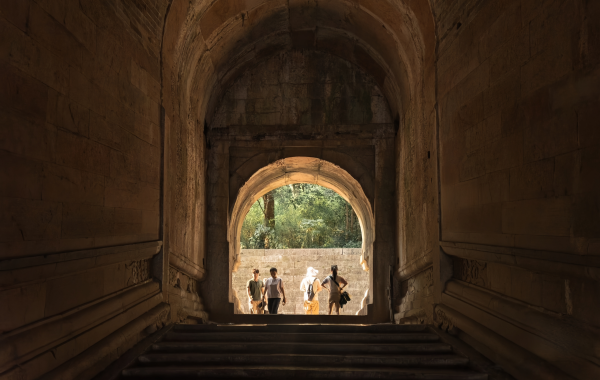
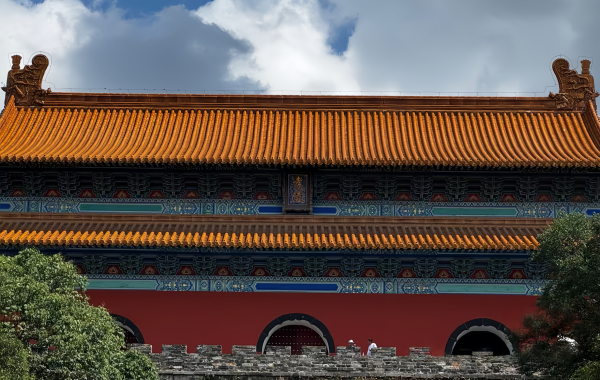
After passing through the Lingxing Gate and the Golden Water Bridge,one enters the main architectural complex of the mausoleum palace.The wooden structures—such as the Gates of Civil and Military Officials and the Sacrificial Hall—were largely destroyed during the Taiping Rebellion;the structures standing today are reconstructions dating from the late Qing Dynasty.However,the structures located at the rear—the Square City,the Ming Tower,and the Treasure Mound—remain the original constructions from the Ming Dynasty.The Square City(Fangcheng)is the largest structure within the Xiaoling Mausoleum,measuring 75 meters in length(east-to-west),31 meters in width(north-to-south),and standing over 16 meters tall.Running through the center of the Square City is a vaulted tunnel;after ascending 54 steps and emerging from the tunnel,one sees the seven characters"This Mountain is the Tomb of the Ming Founder"(Ci Shan Ming Tai Zu Zhi Mu)carved into the southern wall of the Treasure Mound.The Treasure Mound(Baoding)is circular in shape;situated directly beneath it lies the underground palace housing the remains of Zhu Yuanzhang and Empress Ma.Modern magnetic surveying techniques have confirmed that the underground palace remains perfectly preserved and has never been looted;it lies buried dozens of meters beneath the Wanzhu Peak of Dulongfu Hill.

In terms of imperial tomb systems,the Ming Xiaoling Mausoleum introduced three major innovations:transforming the traditional square burial mound into a circular one;establishing a mausoleum layout characterized by a square front section and a circular rear section;and abolishing the"Lower Palace"(Xiagong)structures typical of Tang and Song Dynasty imperial tombs while simultaneously expanding the"Upper Palace"(Shanggong)complex.These systemic innovations were fully adopted and perpetuated by the Thirteen Tombs of the Ming Dynasty in Beijing,as well as by the various imperial tombs of the Qing Dynasty,thereby influencing the architectural design of Chinese imperial mausoleums for over five hundred years.

Photography Tips:
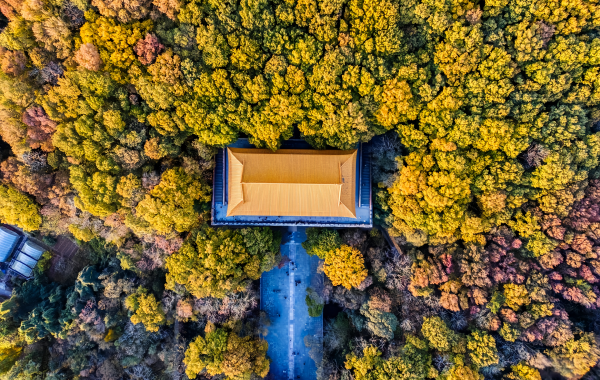
The Stone Elephant Road:In the early morning or late evening,when the sunlight strikes at an oblique angle,the shadows cast by the stone beasts become elongated,creating images with dramatic visual tension.Autumn—when the ginkgo trees turn a brilliant golden hue—is the absolute best season for photography here.

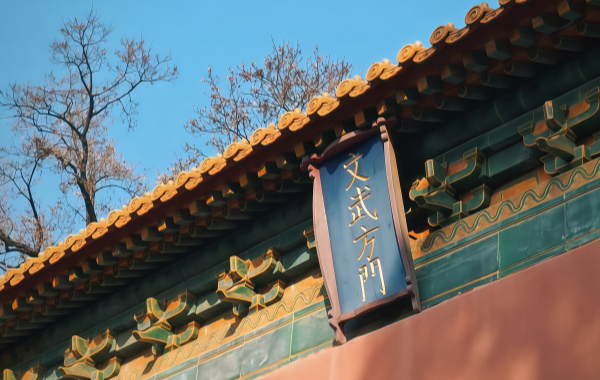
The Square City:Try shooting upward from inside the structure to capture the Shen Gong Sheng De Stele(Stele of Divine Merit and Sacred Virtue);this angle creates a powerful sense of depth and verticality within the frame.Red Walls:The red walls near the Wenwu Square Gate serve as an excellent backdrop for portrait photography.

Drones:Drone flight is prohibited in most areas of the Zhongshan Scenic Area;please strictly adhere to the park's regulations.

Nature's Masterpiece—A Four-Season Tapestry at the Foot of Purple Mountain
The allure of the Ming Xiaoling Mausoleum lies not only in its architectural and cultural heritage but,more importantly,in its seamless integration with the natural environment of Zhongshan Mountain.

1.Plum Blossom Hill(Sun Quan's Tomb):The Foremost Plum Blossom Sanctuary Under Heaven
Plum Blossom Hill was originally the burial site of Sun Quan,the Great Emperor of Eastern Wu.It earned its name—and its current reputation as the"Foremost Plum Blossom Sanctuary Under Heaven"—due to the extensive planting of plum trees throughout the area.From late February to mid-March each year,the hillsides burst into bloom with plum blossoms,transforming the site into a veritable"World of Plum Blossoms."The area is home to numerous rare varieties;if you are lucky,you may even catch a glimpse of the rare Lü'e(Green-Calyx)plum blossoms.Situated atop the hill is the"Memorial Hall of Sun Quan,Great Emperor of Eastern Wu,"where visitors can learn about the life of Sun Quan and his connection to the city of Nanjing.

2.The Four Seasons of the Stone Elephant Road:A Single Path Through Spring,Summer,Autumn,and Winter
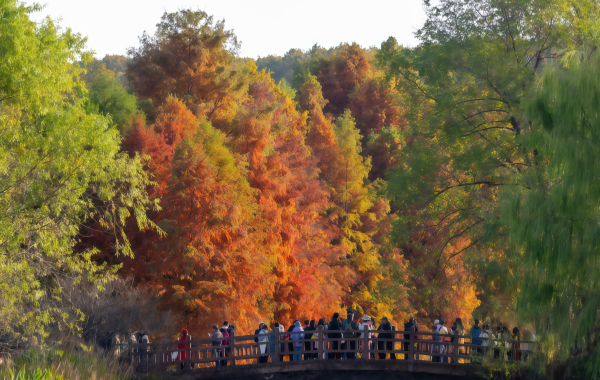
The Stone Elephant Road is hailed as Nanjing's"most beautiful 600 meters."In spring,the path is flanked by vibrant greenery;in summer,a dense canopy of leaves provides deep,cooling shade;in autumn,it transforms into a"Golden Tunnel,"where the golden hues of ginkgo trees intermingle with the crimson foliage of maple trees;and in winter,draped in a mantle of snow,the road takes on a unique and enchanting charm.

3.The Purple Mountain Forest Sea:A Natural Oxygen Bar Within the City
The Zhongshan Scenic Area,home to the Xiaoling Mausoleum,boasts an exceptionally high forest coverage rate.As you stroll through the grounds,you are surrounded by towering ancient trees and breathe in crisp,fresh air.Within the mausoleum complex,visitors can admire ancient and renowned trees such as the Southern Yew and the Camphor tree.Arriving early in the morning—when the forest mist weaves together with the interplay of light and shadow—offers the perfect opportunity to engage in a"forest bath,"a truly rejuvenating experience for both body and soul.

Core Experiences:How to Explore the Imperial Mausoleum

Furong Ancient Town Furong Ancient Town Furong Ancient Town Furong Ancient Town Furong Ancient Town Furong Ancient Town

Five Must-Do Activities to Unlock the Complete Xiaoling Experience
1.Walk the Stone Elephant Road
Timing:Early morning(before 7:00 AM)or late afternoon(after 4:00 PM)—these times see fewer crowds and offer the best lighting conditions.
Experience:Stroll leisurely among the stone beasts,run your fingers over the textures of 600-year-old stone carvings,and immerse yourself in the profound weight of history.Special Recommendation:Visit in the autumn when the ginkgo trees turn a brilliant gold;as light and shadow filter through the foliage and fall upon the stone beasts,the scene is truly breathtaking.

2.Ascend the Ming Tower(Minglou)atop the Square City
Experience:Climb the 54 steps to the summit,then turn to look back at the entire Sacred Way and the distant panorama of Purple Mountain.Standing atop the Ming Tower,you can truly sense the majestic grandeur of this imperial mausoleum.
Tip:The steps are quite steep;please exercise caution.

3.Admire the Play of Light and Shadow on the Red Walls
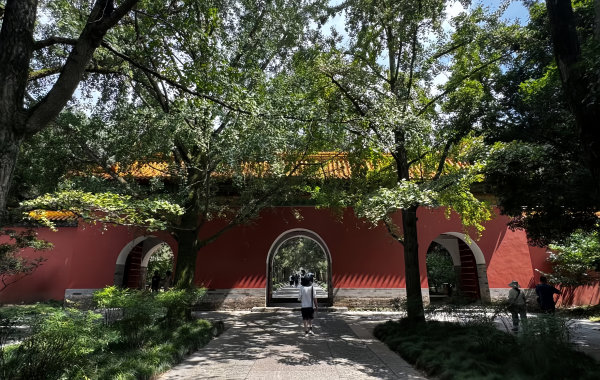
Location:The red walls at the Wenwu Square Gate and the site of the Sacrificial Hall.
Best Time:Between 3:00 PM and 5:00 PM on a sunny day,when the sunlight strikes the red walls at an angle,creating a beautiful interplay of light and shadow.
4.Enjoy the Springtime Bloom at Plum Blossom Hill
Time:Late February to mid-March.
Experience:Wander through a sea of​​blossoms and immerse yourself in the romantic atmosphere of the"Foremost Plum Blossom Hill Under Heaven."You may also visit the Sun Quan Memorial Hall located nearby.

5.Listen to Tales of History
Experience:Hire a tour guide or rent an audio guide device to learn about Zhu Yuanzhang’s legendary journey from commoner to emperor,the story of Zhu Di’s filial piety in erecting a stele for his father,and the amusing anecdote regarding the scholarly mix-up of"Wengzhong"and"Zhongweng."

Suggested Itinerary
1.One-Day"Purple Mountain Highlights"Tour(Ming Xiaoling Mausoleum+Sun Yat-sen Mausoleum+Linggu Temple)

Morning:Ming Xiaoling Mausoleum
Arrive at Gate 5 of the Ming Xiaoling Mausoleum before 7:30 AM(within walking distance of Muxuyuan Subway Station)→Stroll along the eastern section of the Stone Elephant Road to view the 24 stone beasts→Pass the Ornamental Pillars and turn onto Wengzhong Road to see the 8 stone figures→Cross the Lingxing Gate and the Golden Water Bridge→Visit the Wenwu Square Gate and the site of the Sacrificial Hall→Ascend the Ming Tower atop the Square City→Exit via Gate 7 and proceed to the Sun Yat-sen Mausoleum.

Midday:Sun Yat-sen Mausoleum&Surroundings
Visit the Sun Yat-sen Mausoleum(advance reservation required)→Feed the pigeons at the Music Stage→Have lunch within the scenic area or near Muxuyuan Subway Station.

Afternoon:Linggu Temple
Take the scenic area shuttle bus to Linggu Temple→Visit the Beamless Hall and the Linggu Pagoda→In autumn,enjoy the fragrant osmanthus blossoms and red maple leaves→Depart in the evening.IntoTravelChina Tip:This itinerary is quite compact;we recommend purchasing a pass for the scenic area's sightseeing shuttle bus(30 RMB per person)to conserve energy.If you prefer a more in-depth exploration,you may split this itinerary over two days.

2."Deep Immersion"Half-Day Tour(Ming Xiaoling Mausoleum Only)

Morning Session(7:00 AM–11:00 AM):
7:00 AM:Enter the park(to avoid the crowds)→Enter via Gate 5 and begin your tour at the Stone Elephant Road(fewer people in the early morning,making it ideal for photography)→Wengzhong Road→Fangcheng&Minglou Tower→Plum Blossom Hill(you may extend your visit here during the spring season)→Depart the park via Gate 5 or Gate 7 around 11:00 AM.

Afternoon Session(2:00 PM–5:30 PM):
2:00 PM:Enter the park→Start by visiting the Ming Xiaoling Mausoleum Museum(located near the Dismounting Archway)to learn about the history of the tomb complex→Dismounting Archway→Great Golden Gate→Square City→Stone Elephant Road(the afternoon's angled lighting enhances the three-dimensional effect of the stone beasts)→Fangcheng&Minglou Tower(for sunset views)→Depart the park around 5:30 PM.

IntoTravelChina Advantage:We offer services such as custom itinerary planning,ticket booking,and professional guided tours to ensure you enjoy a deep,worry-free travel experience.>> [Consult for Customization Now]

Comprehensive Travel Guide:Transport,Tickets,and Seasons

Furong Ancient Town Furong Ancient Town

How to Get There:A Seamless Connection Guide
Departing from Nanjing City Center

Subway:Take Metro Line 2 to Muxuyuan Station(Exit 1).From there,it is an approximately 10-minute walk to Gate 5 of the Ming Xiaoling Mausoleum.This is the most highly recommended method,as clear signage is available once you exit the station.
Bus:Take Bus Route 20 or 315 to the Ming Xiaoling Station;the site is within walking distance after disembarking.
Self-Driving/Taxi:Navigate to"Ming Xiaoling Scenic Area."Parking lots are available around the scenic area;however,parking spaces within the Zhongshan Scenic Area can be scarce during holidays,so taking the subway is the preferred option.

Departing from Nanjing South Station/Nanjing Station

Take Metro Line 1 or Line 3,then transfer to Line 2 and proceed to Muxuyuan Station.The total journey takes approximately 40–60 minutes.
Important Note:The Zhongshan Scenic Area covers a vast expanse,and the walking distances between individual attractions are considerable.We recommend purchasing a scenic area sightseeing shuttle pass(30 RMB per person),which allows for unlimited rides throughout the day.

Best Time to Visit
The Ming Xiaoling Mausoleum offers beautiful scenery in every season;however,spring and autumn are the prime seasons for a visit.

Spring&Autumn(Peak Seasons:March–May;September–November):The climate is pleasant,and the scenery is at its absolute best.In spring,the Plum Blossom Hill bursts into bloom with tens of thousands of plum trees;in autumn,the ginkgo trees along the Stone Elephant Road turn a brilliant gold,while the red maples glow like fire—making it a paradise for photography enthusiasts.

Summer(Cooling-off Season:June–August):The scenic area is shaded by lush greenery and remains relatively cool.However,visitors should be prepared for rain and mosquitoes;the afternoons can feel somewhat muggy.

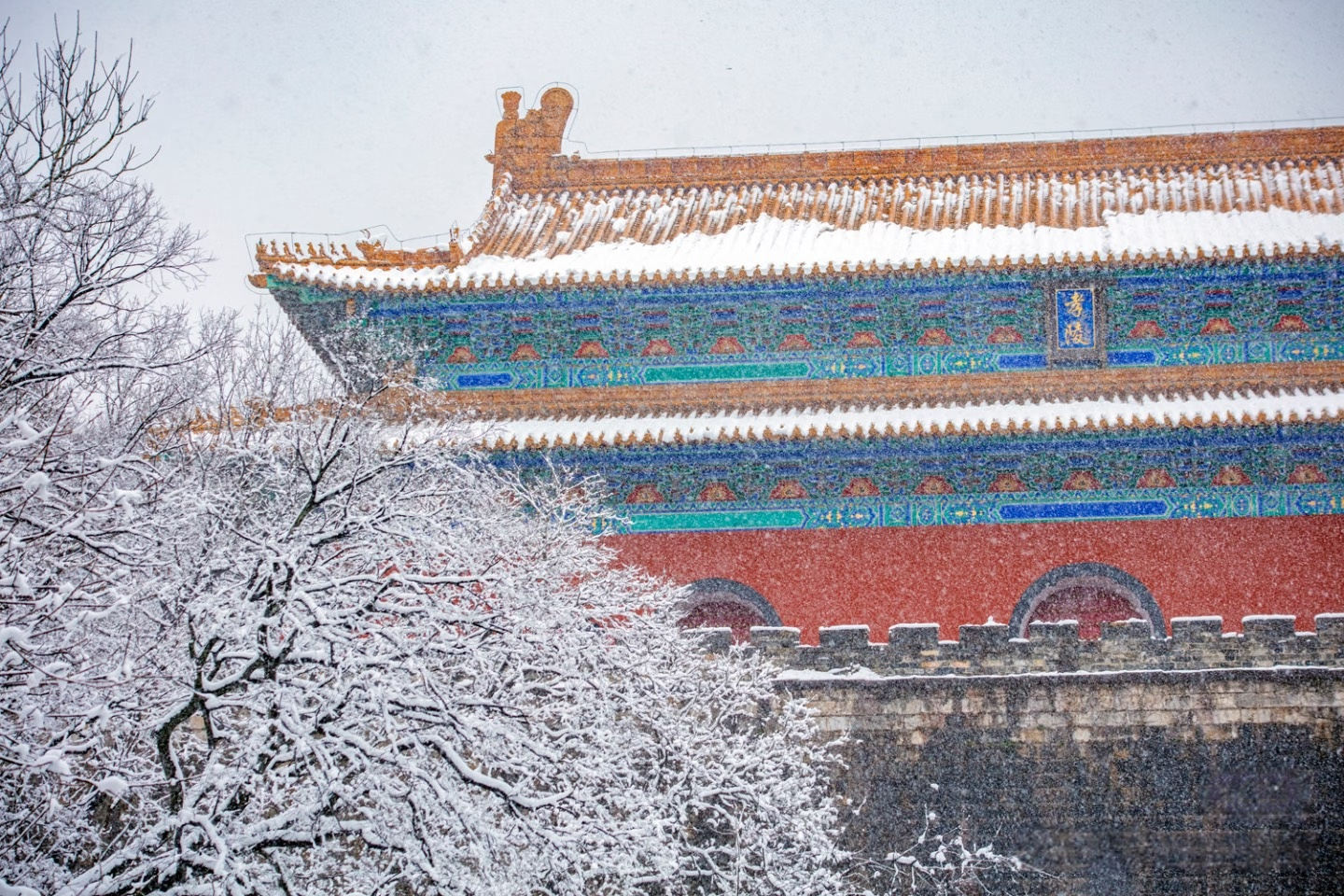
Winter(Tranquil Season:December–February):Visitor numbers are sparse during this time.If you are lucky enough to encounter a snowfall,Zhongshan is transformed into a silver-clad wonderland,where the red walls of the structures contrast beautifully with the white snow,creating a uniquely poetic atmosphere.Note that some areas may close earlier during this season.

Tickets&Opening Hours

Admission:70 RMB per person(A combined ticket for the Zhongshan Scenic Area is available for 100 RMB per person,covering the Ming Xiaoling Mausoleum,Sun Yat-sen Mausoleum,Linggu Temple,and the Music Stage).
Opening Hours:February–November:6:30 AM–6:30 PM;December–January:7:00 AM–5:30 PM.
Money-Saving Tip:Entry to the park is free before 6:30 AM or after 6:30 PM,making it an ideal option for early risers or those visiting in the evening.

Accommodation Options
Near the Scenic Area(Top Recommendation)

Muxuyuan/Xiamafang Area:Located along Metro Line 2,this area offers convenient transportation and a wide selection of guesthouses and chain hotels,providing excellent value for money.We recommend unique guesthouses such as"Wutongli."

Purple Mountain Villa(Zijinshan Zhuang):Situated directly within the scenic area,this resort boasts a serene environment where you can enjoy mountain views right from your window—perfect for travelers seeking a high-quality,upscale experience.

City Center Accommodation(Flexible&Budget-Friendly Options)

Xinjiekou Area:The bustling heart of Nanjing,serving as a major transportation hub with abundant shopping and dining options.This is an ideal choice for travelers planning to visit other attractions across Nanjing.

Confucius Temple(Fuzimiao)/Laomendong Area:Stay here to immerse yourself in Nanjing's rich history and culture,and enjoy evening strolls along the Qinhuai River.

IntoTravelChina Accommodation Booking Tips:We recommend booking 1–2 months in advance,particularly during the Plum Blossom Festival and the National Day holiday period.By booking through us,you can bundle your accommodation,attraction tickets,and transportation into a single itinerary to enjoy exclusive package discounts.>>[Click to contact IntoTravelChina Travel Consultant]

Extend Your Journey:A Scenic Loop Connecting Nanjing with Southern Anhui’s Highlights

Furong Ancient Town

The Ming Xiaoling Mausoleum is by no means the end of your journey;rather,it serves as the perfect starting point for exploring the ancient capital of Jinling and its surrounding landscapes.

Classic 3-Day Loop:Nanjing(Ming Xiaoling Mausoleum+Sun Yat-sen Mausoleum+Confucius Temple)→Yangzhou(Slender West Lake+Ge Garden)→Zhenjiang(Jinshan Temple+Xijindu Historic District).This classic itinerary seamlessly blends imperial history,traditional Jiangnan gardens,and picturesque river scenery.

In-Depth Southern Anhui Tour:Nanjing(Ming Xiaoling Mausoleum)→Huangshan(Yellow Mountain:"Strange Pines and Exotic Rocks")→Hongcun(Ancient Huizhou Village)→Jingdezhen(The Millennium Capital of Porcelain).From imperial mausoleums to landscapes straight out of a traditional painting,embark on a journey to experience the rich diversity of Chinese culture.

Partner with IntoTravelChina to Embark on Your Journey of Ancient Jinling

Furong Ancient Town Furong Ancient Town

The story of the Ming Xiaoling Mausoleum is one of a founding emperor's strategic brilliance,an architectural feat that set a precedent for generations to come,and a host of stone guardians that have stood in silent vigil for 600 years.IntoTravelChina specializes in crafting immersive,personalized,and hassle-free travel experiences across China.Our travel experts are here to provide you with:

Tailored Itineraries:We design the perfect route—featuring the Ming Xiaoling Mausoleum and surrounding Nanjing attractions—customized to your specific interests and schedule.

One-Stop Service:We handle all the details—including entrance tickets,transportation transfers,professional guided tours,and activity bookings.

Exclusive Experiences:We arrange unique opportunities such as private early-morning tours of the Stone Elephant Road,professional photography services,and in-depth historical and cultural commentary from expert scholars.

Let your visit to the Ming Xiaoling Mausoleum be more than just sightseeing;let it be a cultural feast—a true dialogue with six centuries of history.

Start Planning Your Journey Now
We invite you to contact our professional travel consultants;we will provide you with a personalized itinerary proposal and price quote within 24 hours.
>> [Click to contact IntoTravelChina Travel Consultant]

What Our Clients Say?

Based on 10,000+ traveler reviews

...
Daniel Dorothea
Canada
Reviewed on April 29,2025
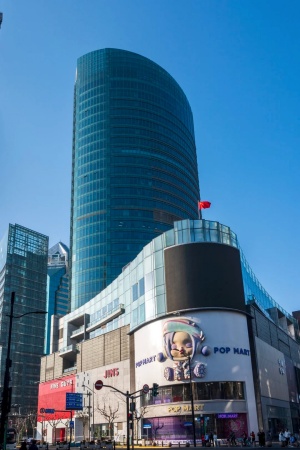
Shopping on Nanjing Road in Shanghai was just amazing! It's truly the "First Commercial Street of China", where tradition and modernity blend perfectly. You can find awesome souvenirs and experience the trendy vibes in cool stores. The neon lights at night are just spectacular, shining bright like Times Square in New York. The food here is incredible too. I had a feast for my taste buds. Shanghai, I'll definitely be back!
Destination(s): Shanghai
Date of Experience: May 08,2024
...
...
Elvis Eva
Canada
Reviewed on June 20,2025
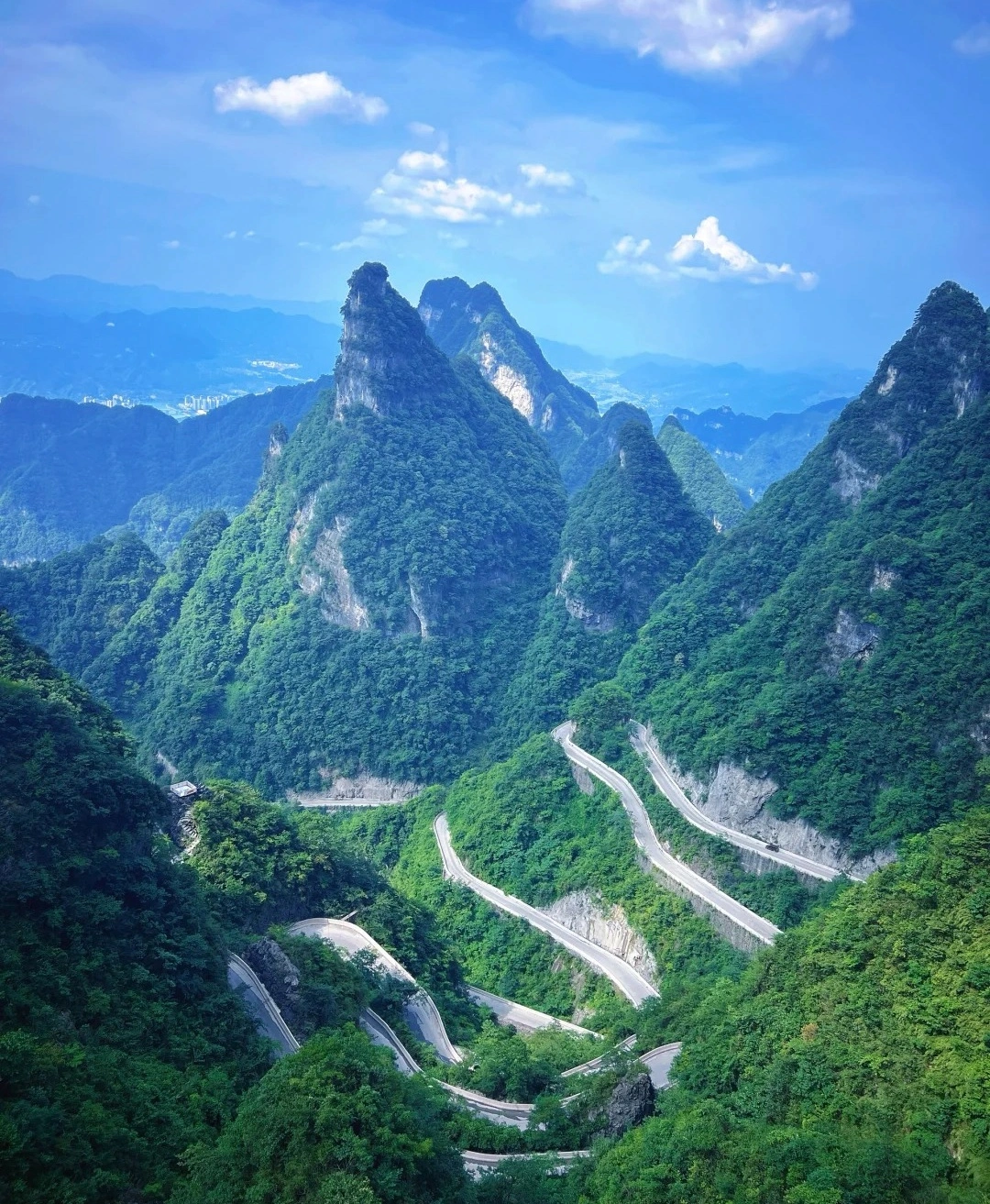
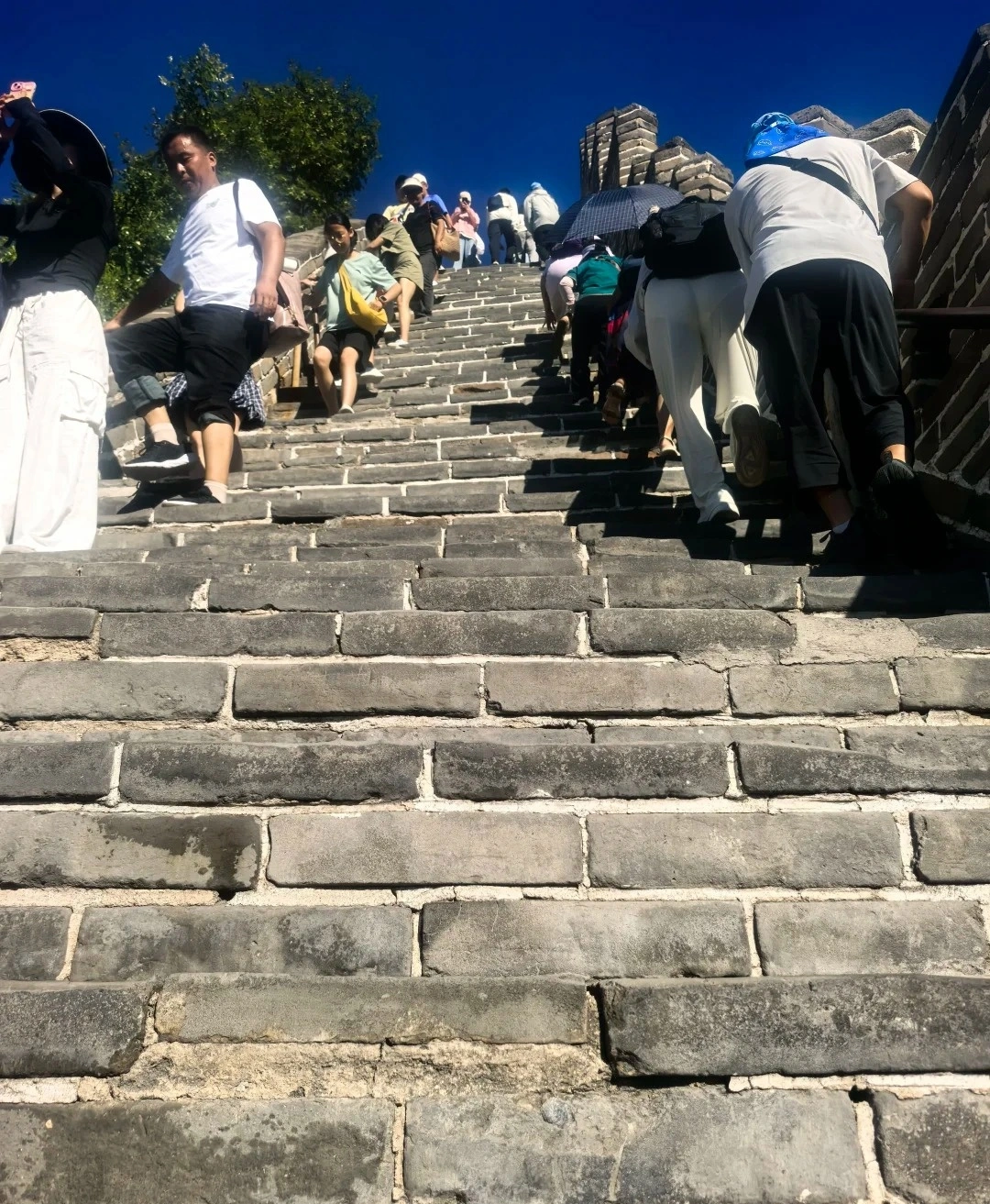
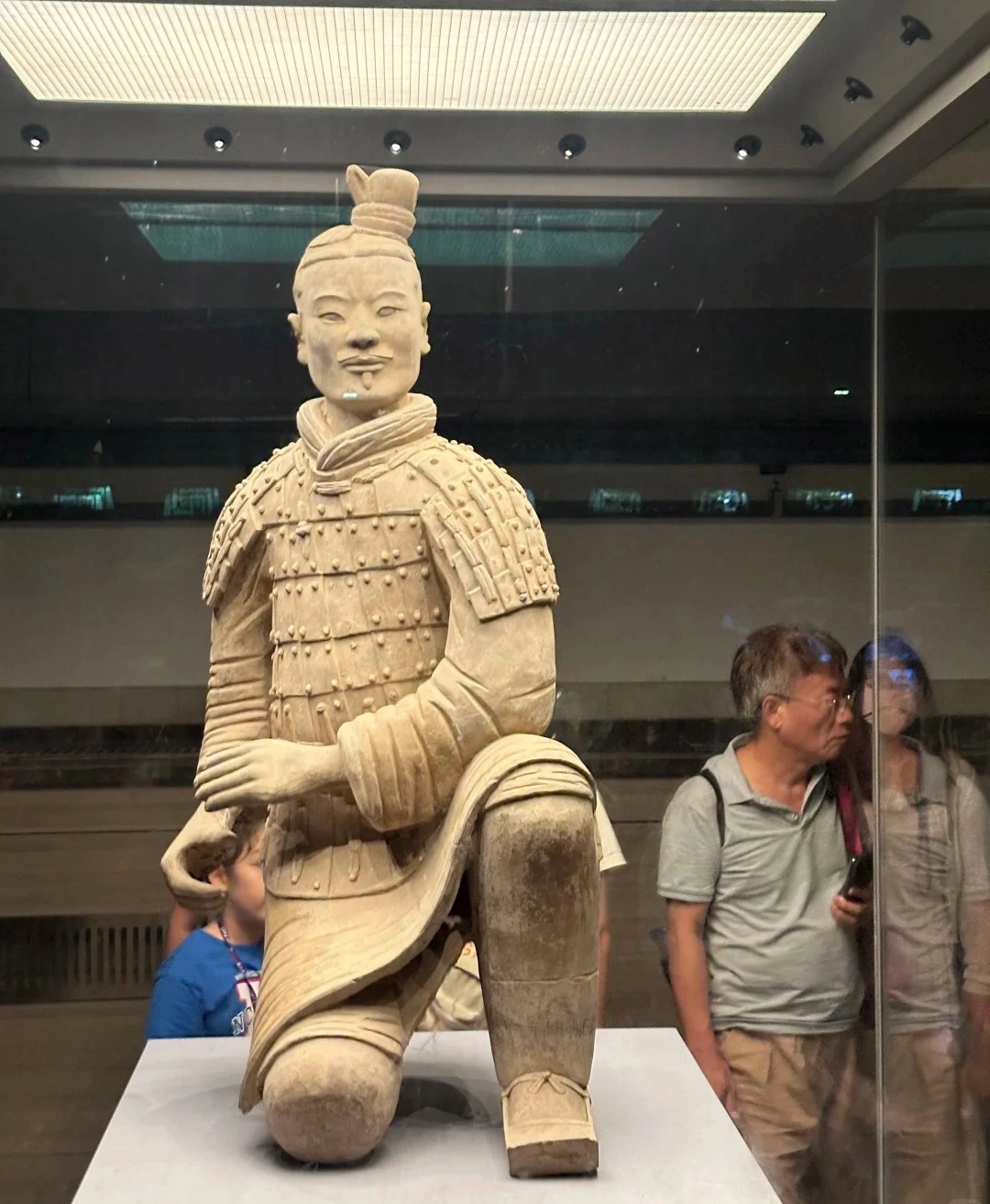
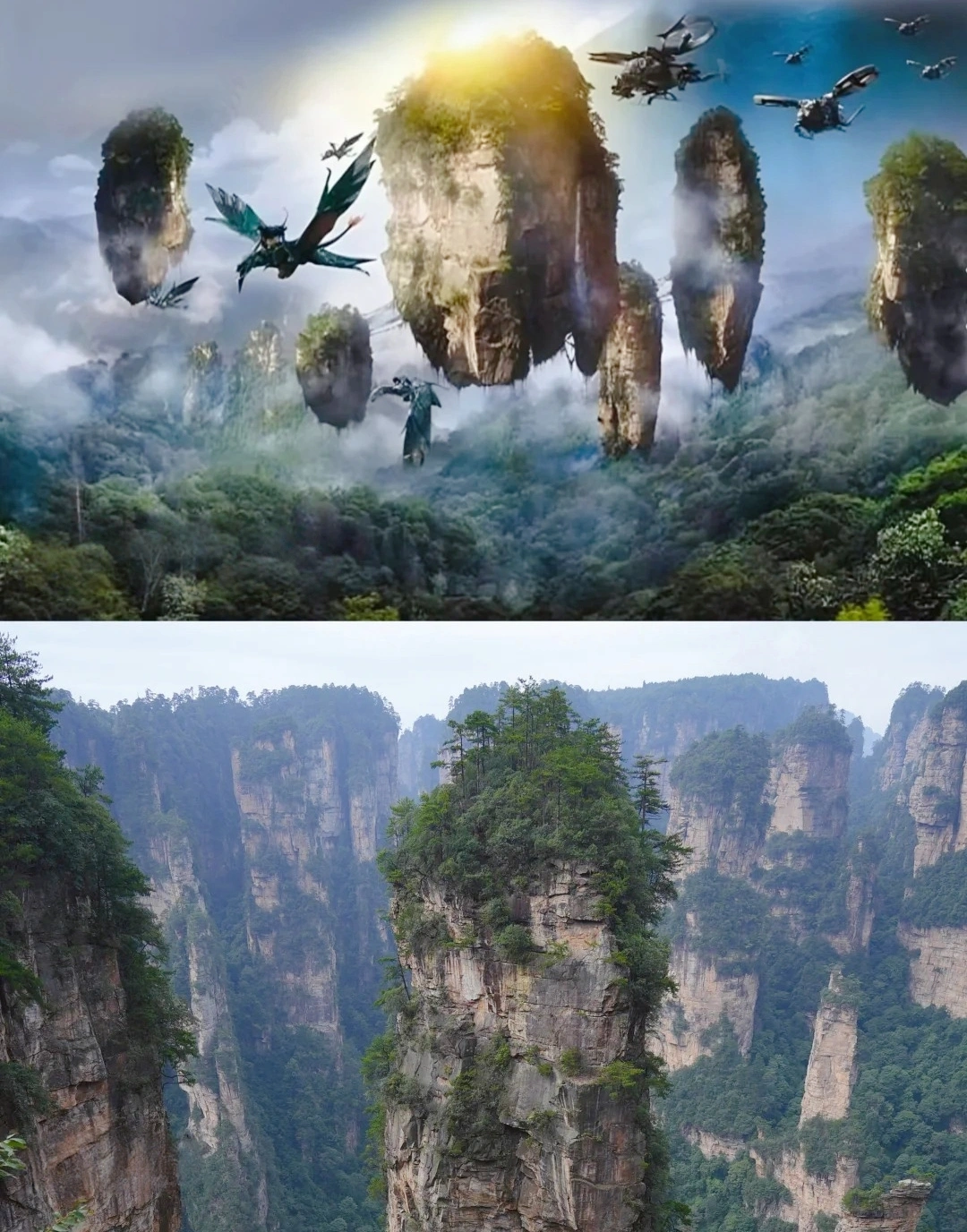
As a solo traveler from Canada, I was nervous about navigating China alone—but this 11-day tour was PERFECT! From hiking the Great Wall at sunrise (Day 3) to gasping at the Terracotta Army (Day 5), every day delivered ‘pinch-me’ moments. The real showstopper? Zhangjiajie’s Avatar Mountains (Day 7)! Our guide made the stone pillars come alive with stories. Massive thanks for handling all logistics—bullet train tickets, entry passes, car! And the 4-star hotels surprised me.
Destination(s): Beijing Xian Zhangjiajie Shanghai
Date of Experience: June 02,2025
... ... ...
...
Simon
America
Reviewed on May 29,2025
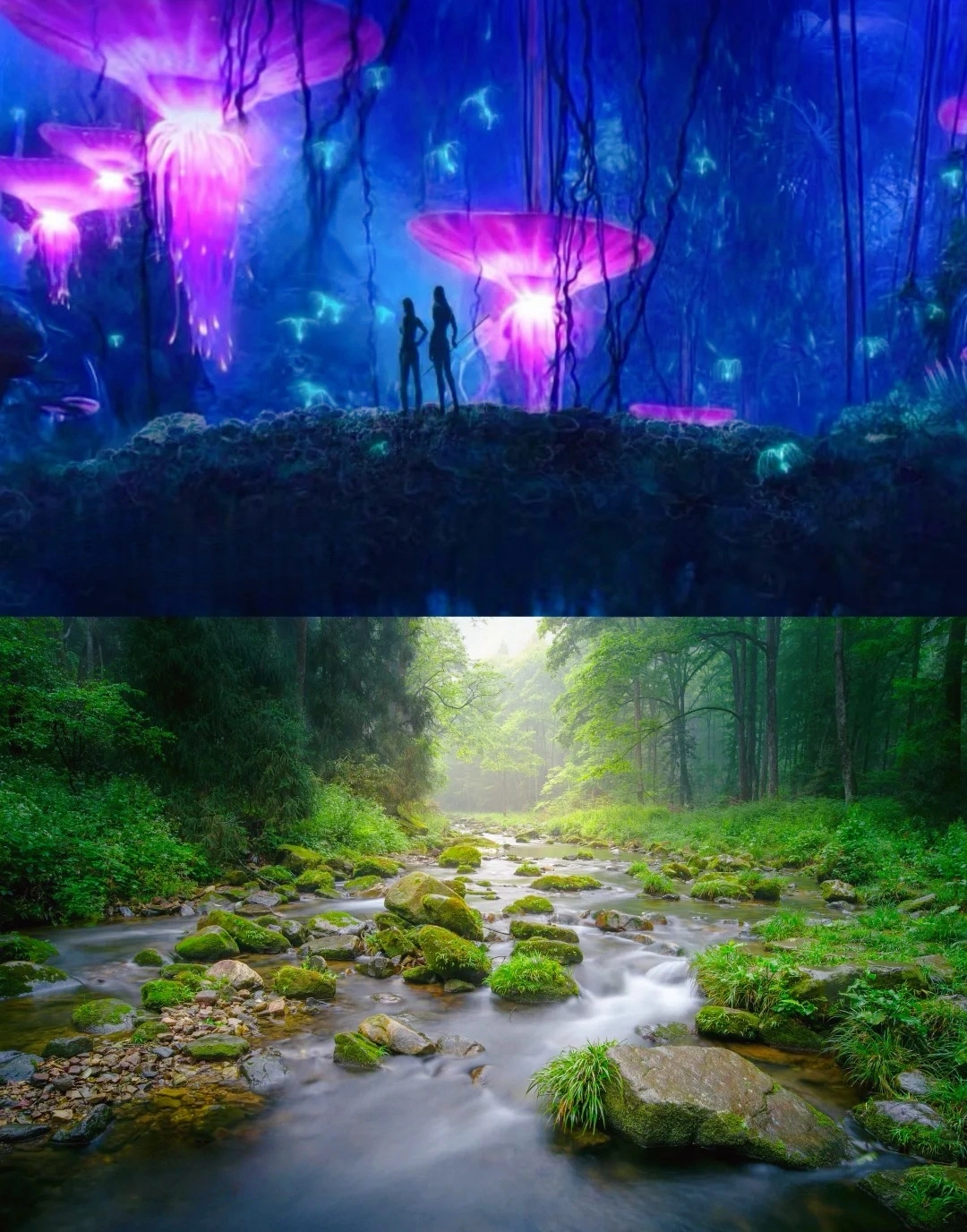
Our 2-day Zhangjiajie tour was beyond spectacular! As someone who’s visited Beijing and Shanghai for work, this trip revealed China’s wild, magical heart. Day 1 in Zhangjiajie National Forest Park felt like stepping onto Pandora—I’m a huge Avatar fan, and Yuanjiajie’s floating peaks left me breathless. The misty pillars and lush valleys like pure movie magic! Then came Fenghuang Ancient Town, we eat dinner beside the thundering waterfall. It seems Unreal! The night views of stilt houses glowing over the river were straight from a fairy tale. For fellow Avatar lovers and adventure seekers: Don’t miss this bucket-list experience! 10/10 would return. A Well-Traveled Film Buff, May 2025
Destination(s): Zhangjiajie
Date of Experience: May 08,2025
... ...

Ask a Question

Question Summary (100 characters)
Details (optional) (2,000 characters)
Name
Country
Email