Tiger Hill: A Journey Through a Scenic Spot in Wuzhong with an Ancient Pagoda and a Thousand-Year-Old Legend

Tiger Hill: A Journey Through a Scenic Spot in Wuzhong with an Ancient Pagoda and a Thousand-Year-Old Legend

Overview: Seeing 2,500 years in a single glance
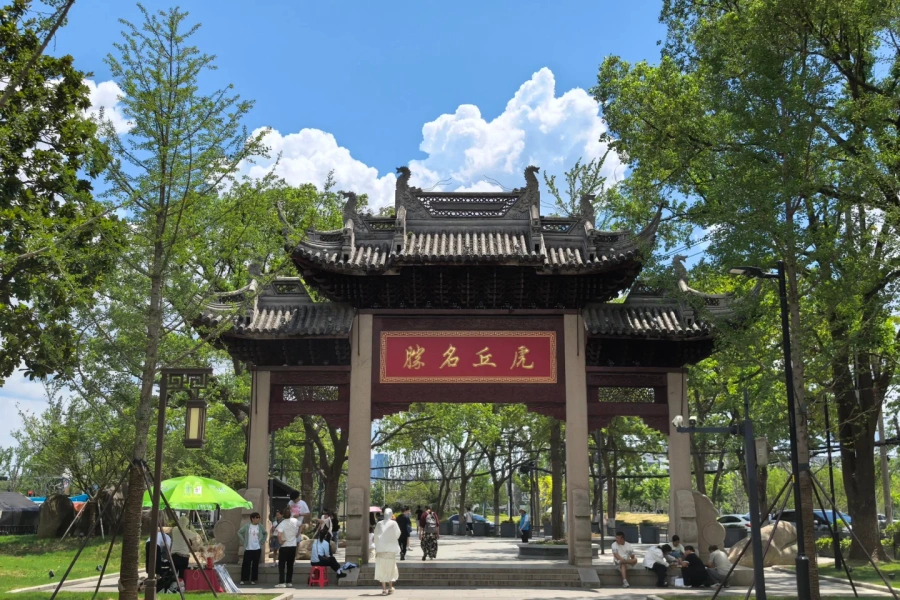
Tiger Hill, located in the northwest corner of the ancient city of Suzhou, Jiangsu Province, is a hill with an elevation of only 34.3 meters and an area of ​​about 20 hectares. It is a three-dimensional history book, blending imperial legends, Buddhist culture, and the art of Jiangnan gardens, and is an excellent starting point for exploring the origins of Wu culture.

Key Highlights at a Glance
Identity tags: The premier scenic spot in Wuzhong / A World Cultural Heritage site (part of the Grand Canal of China - Suzhou section) / A symbol of Suzhou in the Song Dynasty
Core experiences: Gazing up at the Yunyan Temple Pagoda, exploring the mystery of the Sword Pool and feeling the grandeur of the Thousand-Man Stone.
Suggested visit duration: Half a day; can be combined with a day trip to Shantang Street or Lingering Garden.
Address: No. 8, inside Tiger Hill Gate, Gusu District, Suzhou City, Jiangsu Province

  • Tiger Hill: A Journey Through a Scenic Spot in Wuzhong with an Ancient Pagoda and a Thousand-Year-Old Legend-1
  • Tiger Hill: A Journey Through a Scenic Spot in Wuzhong with an Ancient Pagoda and a Thousand-Year-Old Legend-2
  • Tiger Hill: A Journey Through a Scenic Spot in Wuzhong with an Ancient Pagoda and a Thousand-Year-Old Legend-3
  • Tiger Hill: A Journey Through a Scenic Spot in Wuzhong with an Ancient Pagoda and a Thousand-Year-Old Legend-4

Origin: The Secret Burial of the Royal Mausoleum and the Legend of the Ancient Pagoda

Furong Ancient Town

The mystery of the mountain's name—the origin of "Tiger Hill"
The name "Tiger Hill" is closely related to a thrilling imperial secret. Legend has it that during the Spring and Autumn Period, King Helü of Wu died from his wounds in a war with the state of Yue. His son, Fuchai, ascended the throne and conscripted 100,000 soldiers and civilians to secretly build his father's tomb here. Three days after the burial, someone saw a white tiger crouching on the hill, hence the name "Tiger Hill." Another account says that the hill's shape, when viewed from a distance, resembles a crouching tiger, complete with head, body, and tail, thus giving it its name. This seemingly ordinary earthen hill has, since then, held endless imaginings about the King of Wu's sword and its enduring legends.

The Lineage of Heritage: From Royal Mausoleum to Buddhist Holy Land
The history of Tiger Hill is a history of its transformation from a political symbol to a cultural landmark.
- The foundation of the Spring and Autumn Period (6th century BC): King Helü of Wu was buried here. Legend has it that three thousand precious swords, including "Bianzhu" and "Yuchang", were buried with him. The Sword Pool got its name from this, which laid the foundation for its mysterious atmosphere.
- During the Wei, Jin, and Northern and Southern Dynasties: Buddhist temples began to be built, making it an important place for Buddhist activities in Jiangnan. The eminent monk Zhu Daosheng of the Eastern Jin Dynasty once preached here, and even the stubborn rocks nodded in agreement.
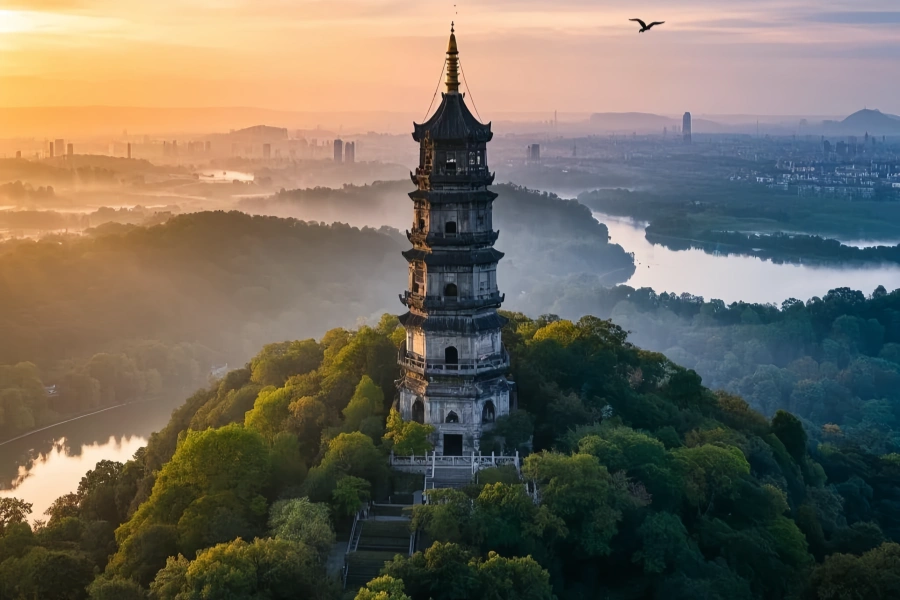
- From the Sui and Tang Dynasties to the Song Dynasty: The scale of the temples expanded and the culture flourished. When Bai Juyi served as the governor of Suzhou, he presided over the construction of the Shantang River to connect the ancient city with Tiger Hill, making it a tourist attraction. The existing landmark building - Yunyan Temple Pagoda (Tiger Hill Pagoda) - was built from the late Five Dynasties to the early Northern Song Dynasty (959-961).
- From the Ming and Qing dynasties to the present day: literati and scholars have continuously composed poems and inscriptions, and gardens and pavilions have been added in a staggered fashion, forming the current pattern of perfect integration of natural landscape and cultural heritage. As part of the Grand Canal of China (Suzhou section), it was listed as a World Cultural Heritage site in 2014.

In-depth understanding: Explore more famous Chinese mountains that blend history and legend >> [Lushan Mountain in Jiangxi: A sacred mountain of culture] | [Huangshan Mountain in Anhui: A wonder of the world]

Must-see wonders: History and Zen found in rocky ravines

Furong Ancient Town Furong Ancient Town Furong Ancient Town Furong Ancient Town

Nature's Creation—Frozen Legends and Geological Epics
The natural landscape of Tiger Hill is imbued with stories and traces of time in every stone.

Sword Pool: An Eternal Mystery Beneath the Cliff
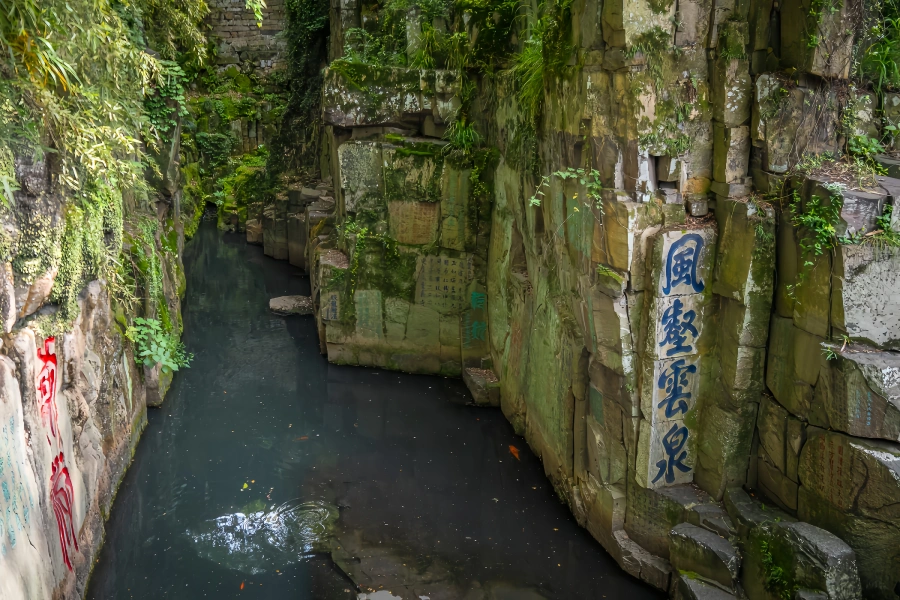
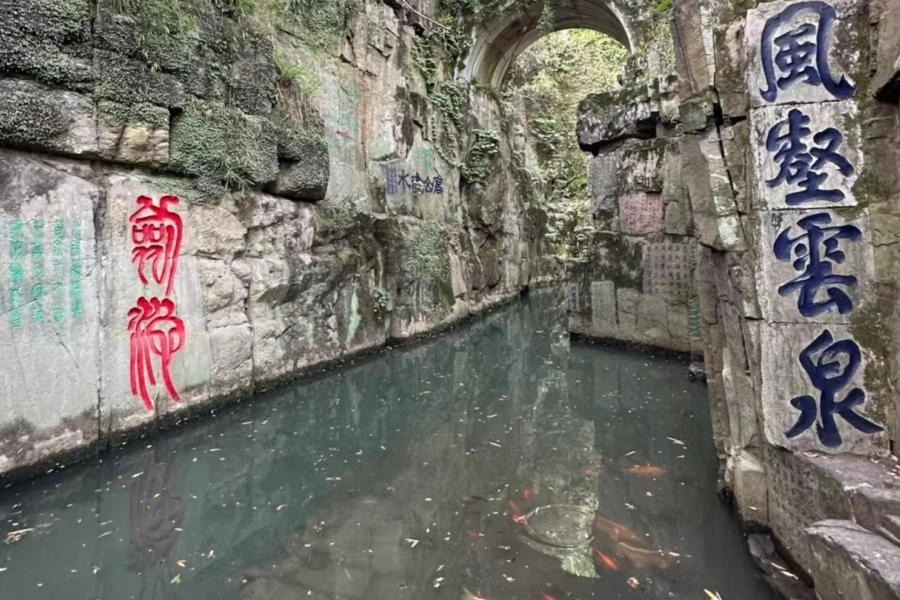
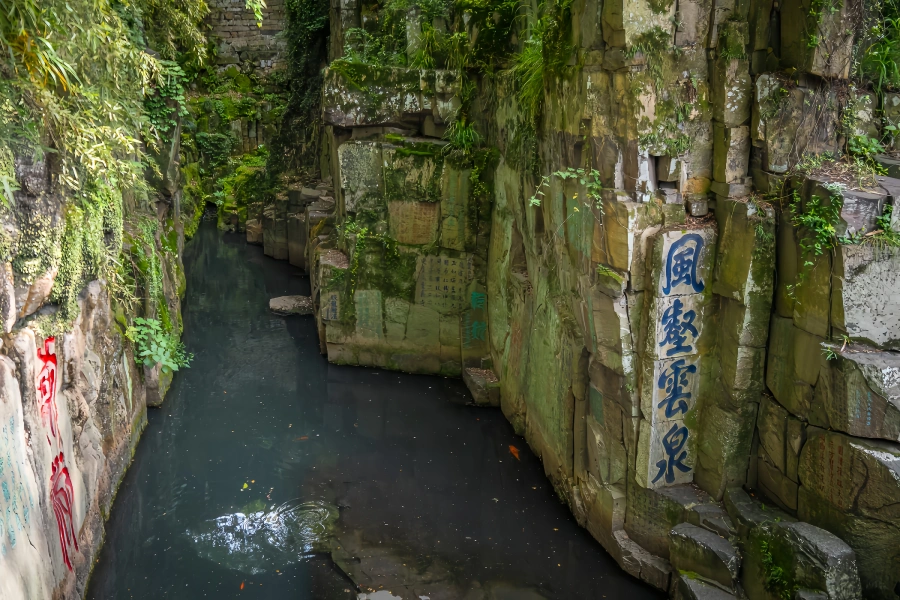
This is the most mysterious and profound core of Tiger Hill. A pool of clear water is surrounded by steep, sheer cliffs on both sides, resembling a long sword. The cliffs are inscribed with calligraphy by famous calligraphers throughout history, among which the two characters "Sword Pool" are said to be written by Wang Xizhi. The pool is dark and murky, and it is said that the entrance to the tomb of King Helü of Wu lies beneath it. According to the *Yue Jue Shu*, both Qin Shi Huang and Sun Quan of Eastern Wu attempted to excavate the pool to find the sword, but both failed. In 1955, the pool was drained and silted up, revealing a "人"-shaped tunnel at the northern end of the pool, sealed by three huge stones. This provided further evidence for the legend of the tomb entrance, but due to concerns about endangering the ancient pagoda on the hilltop, it was not excavated, thus preserving this age-old mystery.

Thousand-Man Stone and White Lotus Pond: Master Sheng preaches, and the stubborn stones nod in agreement.
The Thousand-Man Stone is a huge, flat, reddish-brown boulder, barren of any vegetation. Legend has it that after King Helü was buried, King Fuchai killed over a thousand tomb-building craftsmen on this stone to silence them, their blood soaking into the surface and remaining there for a long time. Another, more Zen-like legend tells of the Eastern Jin Dynasty monk Zhu Daosheng, who preached here to a thousand listeners, even the stubborn stones beside him nodding in agreement. The idiom "Master Sheng preaches, the stubborn stones nod" originates from this story. A "Nodding Stone" in the nearby White Lotus Pond serves as a testament to that Buddhist connection.

The Third Spring and the Hanhan Spring: Flowing Clarity and Ingenuity
The Third Spring (Lu Yu Well) is named after Lu Yu, the Tea Sage, who praised it as "the third best in the world." Its water is crystal clear. The Hanhan Spring, according to legend, was unearthed by a blind monk named "Hanhan" who tapped the ground with his cane, sensing the earth's energy. From then on, the spring flowed continuously, curing his eye ailment. Both springs still flow today, symbolizing nature's bounty and the spirit of perseverance.

Humanistic craftsmanship – a leaning monument and exquisite gardens
The buildings and ruins here are masterpieces of human wisdom in the face of time.

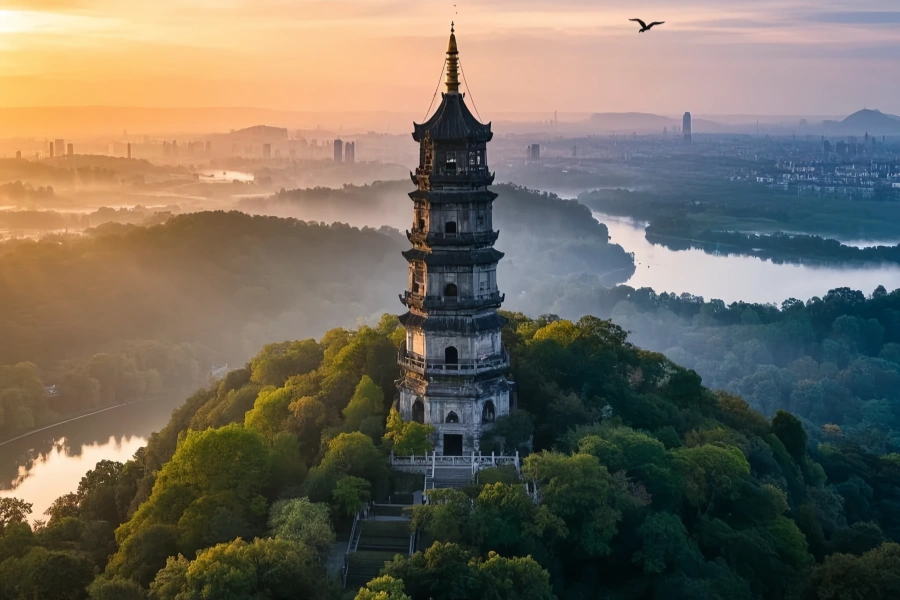
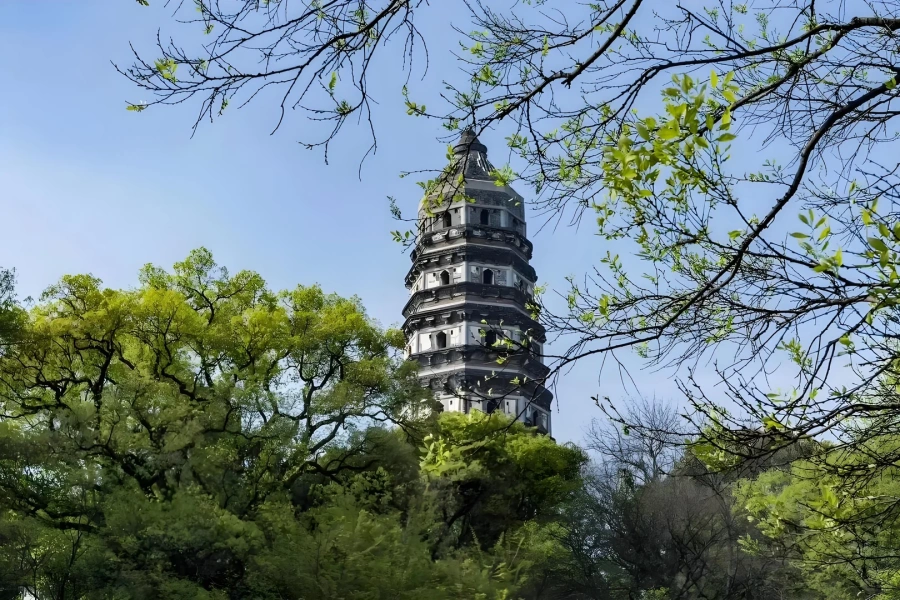
Yunyan Temple Pagoda (Tiger Hill Pagoda): A thousand-year-old leaning tower, a symbol of the city.
This octagonal, seven-story brick pagoda has been an absolute landmark of Suzhou's ancient city since its construction. It is not only the oldest, largest, and most exquisitely structured Buddhist pagoda still standing in Jiangnan, but it is also world-renowned for its unique "leaning yet not collapsing" posture. Due to uneven settlement of the foundation, the pagoda leans northeastward, with a maximum tilt angle of approximately 3 degrees and 59 minutes, and the center of the top is 2.34 meters away from the center of the base. Having withstood a thousand years of wind and rain, war, and even fire, it still stands majestically, a true miracle in the history of ancient Chinese architecture and a must-see for every visitor.

Tiger Hill Sword Pool: An Open-Air Museum of Cliffside Carvings
The cliff face of Jianchi (Sword Pool) is covered with numerous inscriptions dating from the Song to the Qing dynasties. Besides the two large characters "Jianchi," there are also inscriptions such as "Fenghe Yunquan" (attributed to Mi Fu) and "Third Spring." These authentic calligraphic works, combined with the secluded environment, create a sense of historical vicissitude and artistic atmosphere.

Gardens and Architecture: The Elegant Charm of Wu Region Within Reach
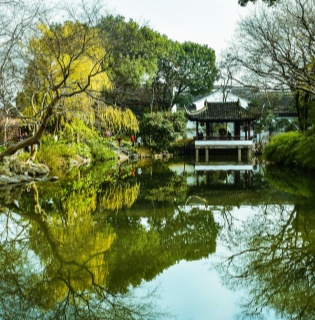
- Yongcui Villa: Built in the Qing Dynasty, it is a small terraced garden built on the mountain. It cleverly utilizes the natural slope of Tiger Hill to form a layered landscape, which reflects the high level of Suzhou gardens' "adapting to local conditions".
- Wanjing Villa (Bonsai Garden): It brings together the essence of Suzhou-style bonsai, condensing the artistic conception of mountains, rivers and ancient trees into a small pot, making it the best place to appreciate the art of Suzhou bonsai.
- Broken Beam Hall (Second Mountain Gate): Originally built in the Tang Dynasty, the existing structure is a remnant from the Yuan Dynasty. Its main beam is made of two sections of round wood spliced ​​together, hence the name "Broken Beam". It cleverly utilizes the principles of mechanics and is a vivid manifestation of the wisdom of ancient architecture.

Photography Tips:
The classic Leaning Tower of Pagoda photo spot is on the platform in front of the "Wind, Ravine, Cloud, and Spring" stone carving at Sword Pool. With a telephoto lens, you can capture both the ancient tower and the depth of Sword Pool below, creating an excellent composition.
The humanistic atmosphere can be captured by taking photos on the Thousand People Stone in the early morning or before the park closes, using low-angle lighting to express the texture of the stone surface and the sense of historical vastness.
Don't miss the moon gate and flower windows at Yongcui Villa, which are excellent spots for framing photos.

Core Experience: An Immersive Guide to Tracing Wu Culture

Furong Ancient Town Furong Ancient Town Furong Ancient Town Furong Ancient Town

Five things you must do to unlock the complete Tiger Hill experience
1. Gazing up at the thousand-year-old Leaning Tower, one can feel the power of time.
- Key point: Look up and photograph the Yunyan Temple Pagoda from multiple angles, especially from the direction of Jianchi, to feel its tilted posture and ancient brick color, and experience the historical weight of "a thousand years in a moment".
2. Unravel the mystery of Sword Pool and become a historical detective.
- Experience: Stand by the Sword Pool, carefully observe the inscriptions on the cliff and the bottomless green water, imagine the legend of the Wu King's tomb and the Qin Emperor's search for the sword, touch the cool rock wall with your own hands and feel the cold touch of history.
3. Sit quietly on the Thousand-Man Stone and listen to the echo of "the stubborn stone nodding."
- Location: Take a short break on the spacious Thousand-Man Stone and imagine the ancient scenes of Sheng Gong preaching or a thousand people being buried alive. This is the core space for experiencing the historical turning point of Tiger Hill "from bloodshed to Zen".
4. Savor a pot of Yunyan tea and reflect on the tea sage's evaluation.
- A refined pastime: At the teahouse in the scenic area, brew a pot of Biluochun tea with water from the Third Spring (Lu Yu Well), emulate the ancients in tasting tea and discussing philosophy, and experience the elegant pleasure of Lu Yu, the Tea Sage, when he evaluated the quality of water in the world.
5. Stroll through a bonsai garden and appreciate miniature landscapes.
- Artistic Immersion: Appreciate Suzhou-style bonsai at Wanjing Villa. Observe how craftsmen condense the ancient simplicity of pines and cypresses and the artistic conception of mountains and rivers into small flower pots through pruning and wiring. This is another window to understanding the exquisite culture of Suzhou.

Suggested tour routes
Half-day "Exploring the Essence of Antiquity" tour (suitable for those with limited time):
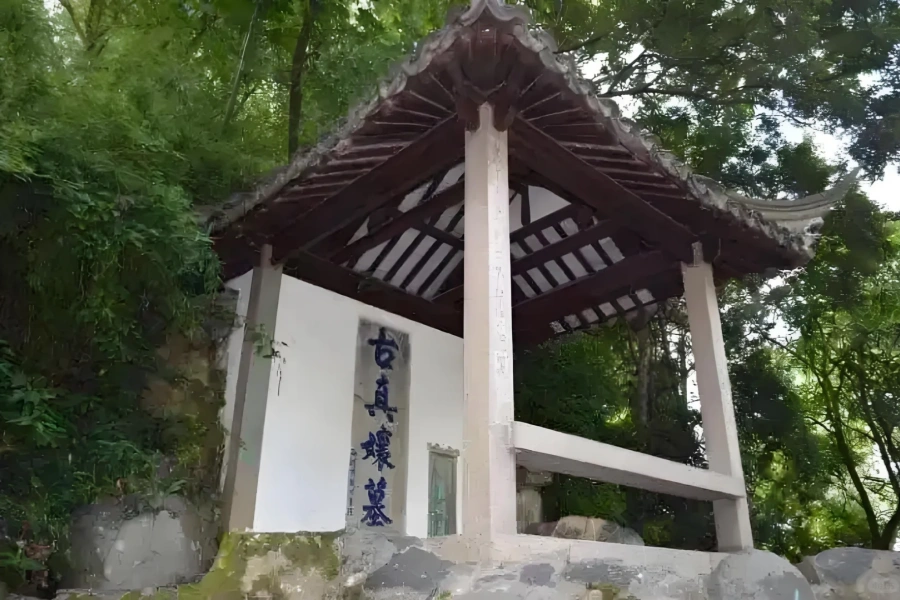
Enter from the South Gate (Tou Shan Gate) → Pass through the Broken Beam Hall → Go up the main road and visit Hanhan Spring, Sword Testing Stone, and Zhenniang Tomb → Arrive at the core area, Thousand People Stone and White Lotus Pond → Go down to the Sword Pond from the left, and enjoy and photograph the Sword Pond and Tiger Hill Pagoda from multiple angles → Go up through the "Another World" round gate to view the Yunyan Temple Pagoda (Tiger Hill Pagoda) up close → After visiting the surrounding area of ​​the pagoda garden, you can choose to descend the mountain via the East Route (Wanjing Mountain Villa Bonsai Garden) or the West Route (Yongcui Mountain Villa) according to your interests, and leave from the North Gate or South Gate.

A one-day in-depth tour of gardens and cultural history (highly recommended):
- Morning: Focus on Tiger Hill and explore it in depth according to the "Exploring the Essence of Ancient Sites" route. You can have a leisurely lunch at a teahouse in the scenic area.
- Afternoon: Choose any of the following options for a combined tour:
- Option A (Historical District): Exit from the North or South Gate of Tiger Hill and take a bus or sightseeing boat to Qili Shantang Street. Stroll along the ancient street, from "the No. 1 scenic spot in Wuzhong" to "the No. 1 famous street in Gusu", and feel the continuity from imperial legends and Buddhist holy sites to the bustling city life.
- Option B (Classical Gardens): Take a taxi to Lingering Garden (approximately 15 minutes drive). Lingering Garden is renowned for its exquisite architectural space design and Taihu stone peaks, which contrast sharply with the grand nature and legendary history of Tiger Hill. In one day, you can experience two extremes of Suzhou's landscape: "expansive and refined".

IntoTravelChina's advantages: We can book the most suitable accommodations for you, arrange all the connections between activities, and provide detailed hiking route maps and safety guidelines.
Professional Guide: IntoTravelChina offers personalized itineraries, including a dedicated guide, transportation, and activity arrangements, ensuring a worry-free and in-depth travel experience. >> [Inquire Now for a Customized Itinerary]

Complete Travel Guide: Transportation, Seasons, and Tickets

Furong Ancient Town Furong Ancient Town

How to get there: Convenient access to the northwest of the ancient city
Tiger Hill is located in the northwest of the ancient city of Suzhou, and has a well-developed transportation network, making it accessible by multiple means of transportation.
- Departing from Suzhou Railway Station/High-Speed ​​Rail North Station:
- Subway + Bus: Take Subway Line 2 to "Shantang Street" Station, then transfer to Bus Route 1 (North Line) or Bus Route 1 to reach the South Gate of Tiger Hill directly. This is a dedicated tourist bus line, which is very convenient.
- Taxi/ride-hailing: The most convenient option. Set your destination as "South Gate of Tiger Hill Scenic Area". The journey takes about 20-30 minutes.
- Ancient Canal Cruise: From Bai Juyi Wharf on Shantang Street or Panmen Scenic Area, you can take an ancient canal cruise to Tiger Hill. This is the most characteristic mode of transportation in Jiangnan, allowing you to experience the artistic conception of "boating through a painting".
- Driving tips: Parking is available at the scenic area (both the South and North gates), but spaces are limited during holidays. We recommend arriving early or using public transportation.

Best time to visit
Tiger Hill offers different scenery in each of the four seasons, but the spring and autumn seasons are the most comfortable and poetic for visitors.
- Spring and Autumn (March-May, September-November): Pleasant climate and flourishing life. In spring (March-April), flowers bloom in profusion, especially crabapple and azalea, creating a bright and beautiful scene; in autumn (October-November), the sky is high and the clouds are light, and the ancient pagoda complements the red maple and ginkgo trees, creating a colorful and wonderful scene, making it an excellent time for photography.
- Summer mornings and evenings (June-August): It's hot during the day, but Tiger Hill is covered in lush trees, making it relatively cool. It's recommended to visit in the early morning when the park opens or in the late afternoon before closing to avoid crowds and high temperatures, and when the light is softer.
- Tranquil Winter Season (December-February): Few tourists visit, and if it snows, the Tiger Hill Pagoda and Sword Pool, covered in silver, are serene and solemn, possessing a unique, timeless beauty.

Tickets and Opening Information
- Ticket price: 80 yuan during peak season (April, May, July, August, September, October); 60 yuan during off-season (January, February, March, June, November, December).
- Opening hours: Generally 07:30-17:30 (ticket sales stop at 17:00), subject to slight seasonal adjustments, please check before your trip.
- Reservation channels: Tickets can be booked through official WeChat accounts such as "Suzhou Gardens Tourism" or partner platforms. Advance reservations are recommended for holidays.

IntoTravelChina Service Recommendations:
While Tiger Hill is a landmark of Suzhou, a professional guide is essential for a deeper understanding of its underlying Wu culture, Buddhist history, and architectural mysteries. Booking through us not only guarantees your tickets but also arranges a guide knowledgeable in local history and culture, allowing you to see more than just stones and pagodas; you'll experience a living history. For day trips connecting Shantang Street or Lingering Garden, we can also design the most efficient itinerary and time allocation for you. >> [Click to contact an IntoTravelChina travel consultant]

Extended Journey: A Loop Tour of Suzhou's Ancient City Culture and Gardens

Furong Ancient Town

Tiger Hill is the prelude to Suzhou's long history and can be combined with other attractions representing different aspects of Suzhou to create a perfect cultural tour.

- Suzhou Ancient City Cultural and Historical One-Day Route: Tiger Hill (origin of Wu culture) → Take a boat or bus to Shantang Street (an ancient canal street with a thousand-year history) → Suzhou Museum (modern architectural aesthetics) → Humble Administrator's Garden (the pinnacle of garden art). This route comprehensively covers the core cultural symbols of Suzhou, from grand to exquisite, spanning from ancient times to the present.
- Two-day itinerary featuring two World Heritage gardens:
- Day 1: Tiger Hill (World Cultural Heritage - Grand Canal) → Lingering Garden (World Cultural Heritage - Suzhou Classical Garden) → Night tour of Master of the Nets Garden (World Cultural Heritage, experience Kunqu Opera in the night garden).
- Day 2: Humble Administrator's Garden → Suzhou Museum → Pingjiang Road Historic District.
- A combined tour of ancient water towns in Jiangnan: This tour connects Tiger Hill and Panmen (the city gate by land and water) in Suzhou city with Zhouzhuang, Tongli, or Luzhi ancient towns outside the city, allowing you to experience a complete Jiangnan landscape, from urban landmarks to water town life.>>Contact us to customize the above related itinerary

Join hands with IntoTravelChina to start your journey of exploring Wuyue literature and history

Furong Ancient Town

The story of Tiger Hill is about the secret of an emperor, the persistence of an ancient tower, the persistence of a monk, and the lament of countless literati and writers. IntoTravelChina focuses on creating a deep, personal, and hassle-free Chinese cultural travel experience. Our travel experts can help you:
- Tailor-made itinerary: Design an in-depth tour of Suzhou that focuses on Wuyue history, Buddhist art, or classical architecture according to your interests, embedding Tiger Hill precisely into your travel context.
- One-stop service: Get all attraction ticket reservations, professional tour guides, special transportation in the ancient city (such as hand-cranked boats) and surrounding special dining recommendations.
- Exclusive Experiences: Arrange a morning tour at a closed time, a conversation with a cultural and historical expert, or an exclusive photography guide who captures the Tiger Hill Pagoda from a specific angle.

Let your trip to Tiger Hill not only climb a hill, but also a thought wandering that dialogues with 2,500 years of history.
> Start planning your journey today
> Welcome to contact our professional travel consultants, we will provide you with an exclusive itinerary plan and quotation within 24 hours. >> [Click to contact IntoTravelChina Travel Consultant]

Recommended Tours

Top 3 tours chosen by most customers to explore in the best way. Check the detailed itinerary, or tailor your own trip now with us.

Zhangjiajie Tour
5-Day Suzhou & Hangzhou & Shanghai Tour

5 Days  |  Shanghai-Xitang-Suzhou-Hangzhou

Zhangjiajie Tour
3-Day Shanghai to Suzhou Trip

3 Days  |  Shanghai-Xitang Ancient Town-Suzhou

Zhangjiajie Tour
4-Day Shanghai and Nanjing Trip

4 Days  |  Shanghai-Nanjing

What Our Clients Say?

Based on 10,000+ traveler reviews

...
Daniel Dorothea
Canada
Reviewed on April 29,2025
Shopping on Nanjing Road in Shanghai was just amazing! It's truly the "First Commercial Street of China", where tradition and modernity blend perfectly. You can find awesome souvenirs and experience the trendy vibes in cool stores. The neon lights at night are just spectacular, shining bright like Times Square in New York. The food here is incredible too. I had a feast for my taste buds. Shanghai, I'll definitely be back!
Destination(s): Shanghai
Date of Experience: May 08,2024
...
...
Elvis Eva
Canada
Reviewed on June 20,2025
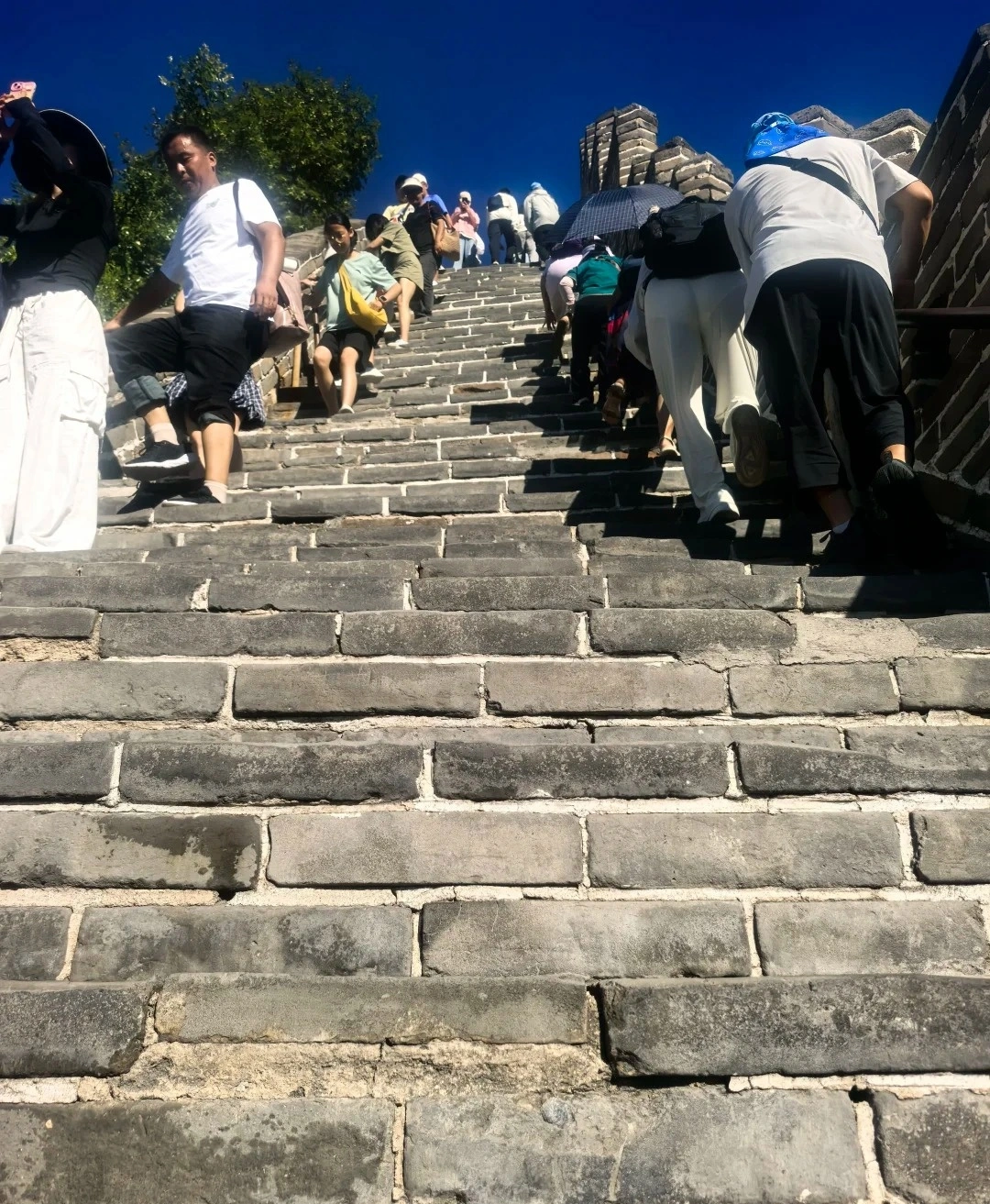
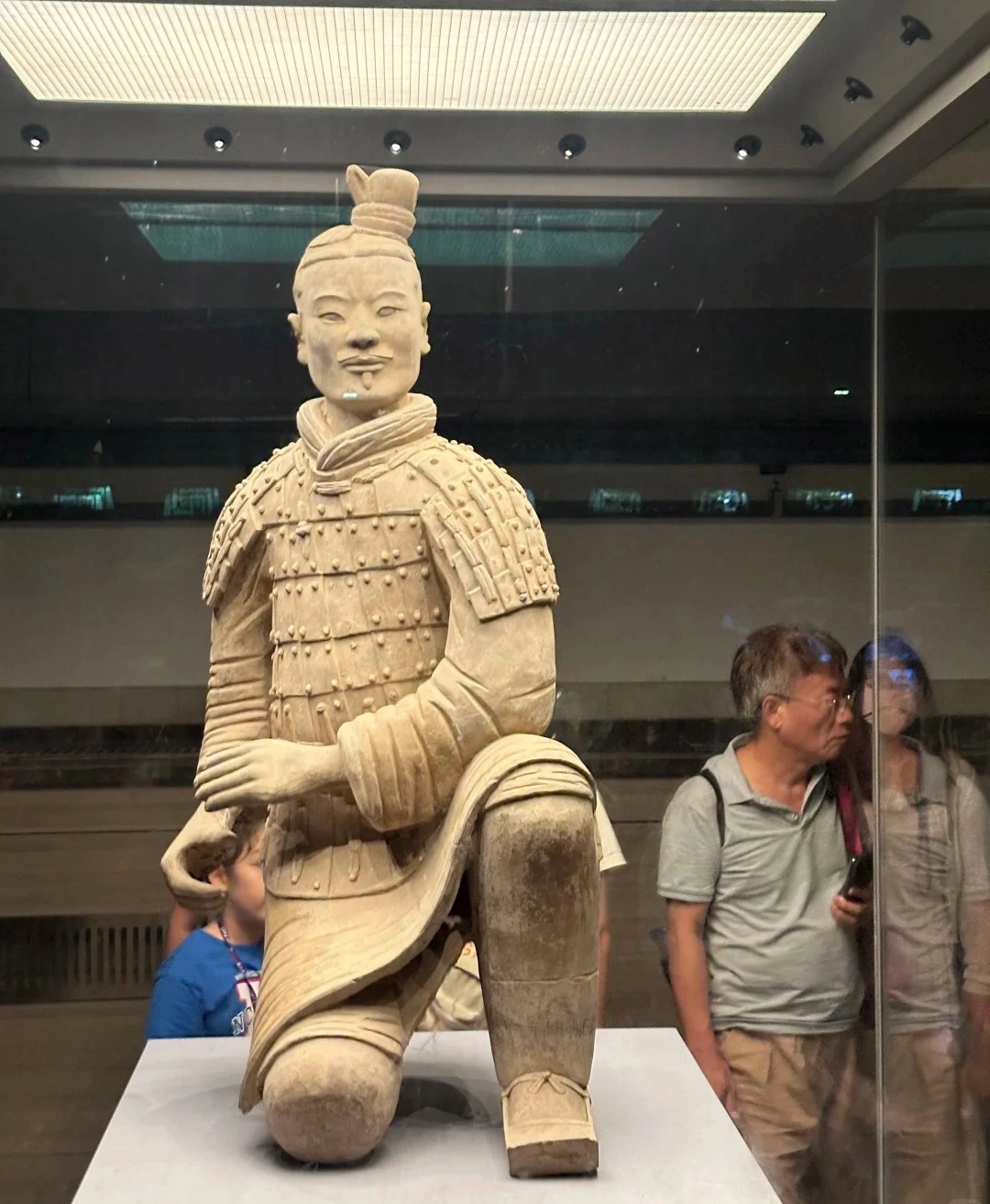
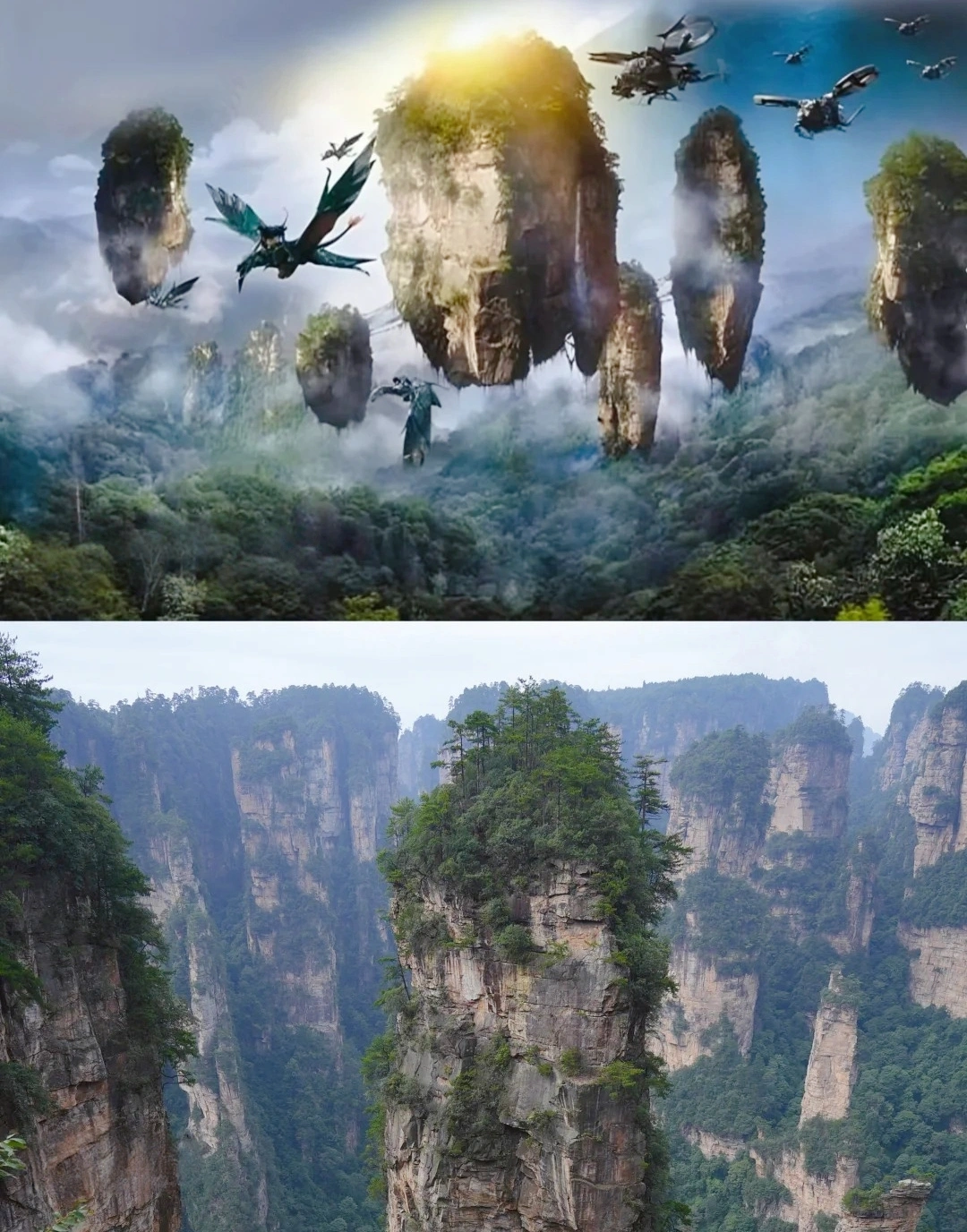
As a solo traveler from Canada, I was nervous about navigating China alone—but this 11-day tour was PERFECT! From hiking the Great Wall at sunrise (Day 3) to gasping at the Terracotta Army (Day 5), every day delivered ‘pinch-me’ moments. The real showstopper? Zhangjiajie’s Avatar Mountains (Day 7)! Our guide made the stone pillars come alive with stories. Massive thanks for handling all logistics—bullet train tickets, entry passes, car! And the 4-star hotels surprised me.
Destination(s): Beijing Xian Zhangjiajie Shanghai
Date of Experience: June 02,2025
... ... ...
...
Simon
America
Reviewed on May 29,2025
Our 2-day Zhangjiajie tour was beyond spectacular! As someone who’s visited Beijing and Shanghai for work, this trip revealed China’s wild, magical heart. Day 1 in Zhangjiajie National Forest Park felt like stepping onto Pandora—I’m a huge Avatar fan, and Yuanjiajie’s floating peaks left me breathless. The misty pillars and lush valleys like pure movie magic! Then came Fenghuang Ancient Town, we eat dinner beside the thundering waterfall. It seems Unreal! The night views of stilt houses glowing over the river were straight from a fairy tale. For fellow Avatar lovers and adventure seekers: Don’t miss this bucket-list experience! 10/10 would return. A Well-Traveled Film Buff, May 2025
Destination(s): Zhangjiajie
Date of Experience: May 08,2025
... ...

Ask a Question

Question Summary (100 characters)
Details (optional) (2,000 characters)
Name
Country
Email