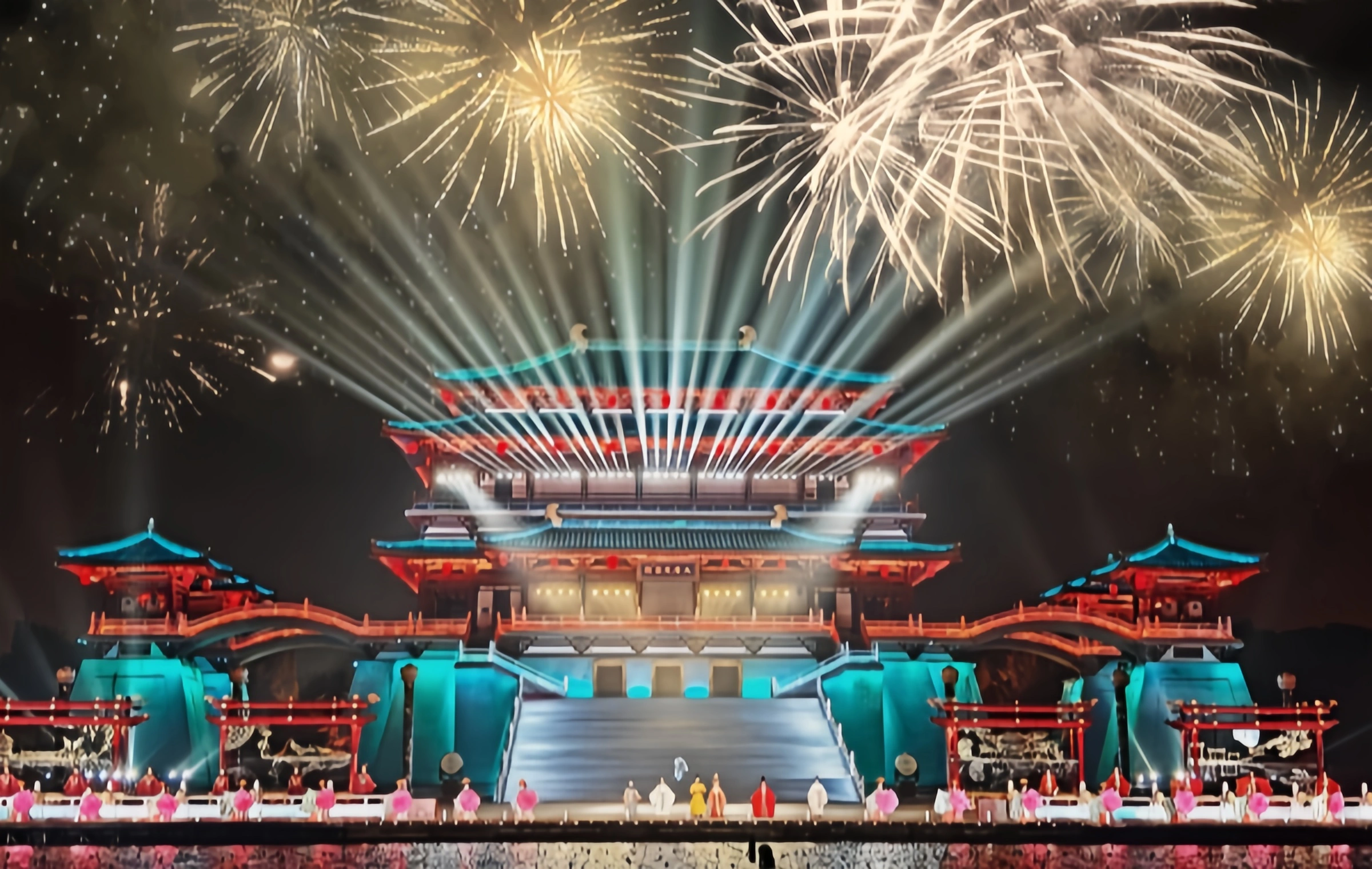
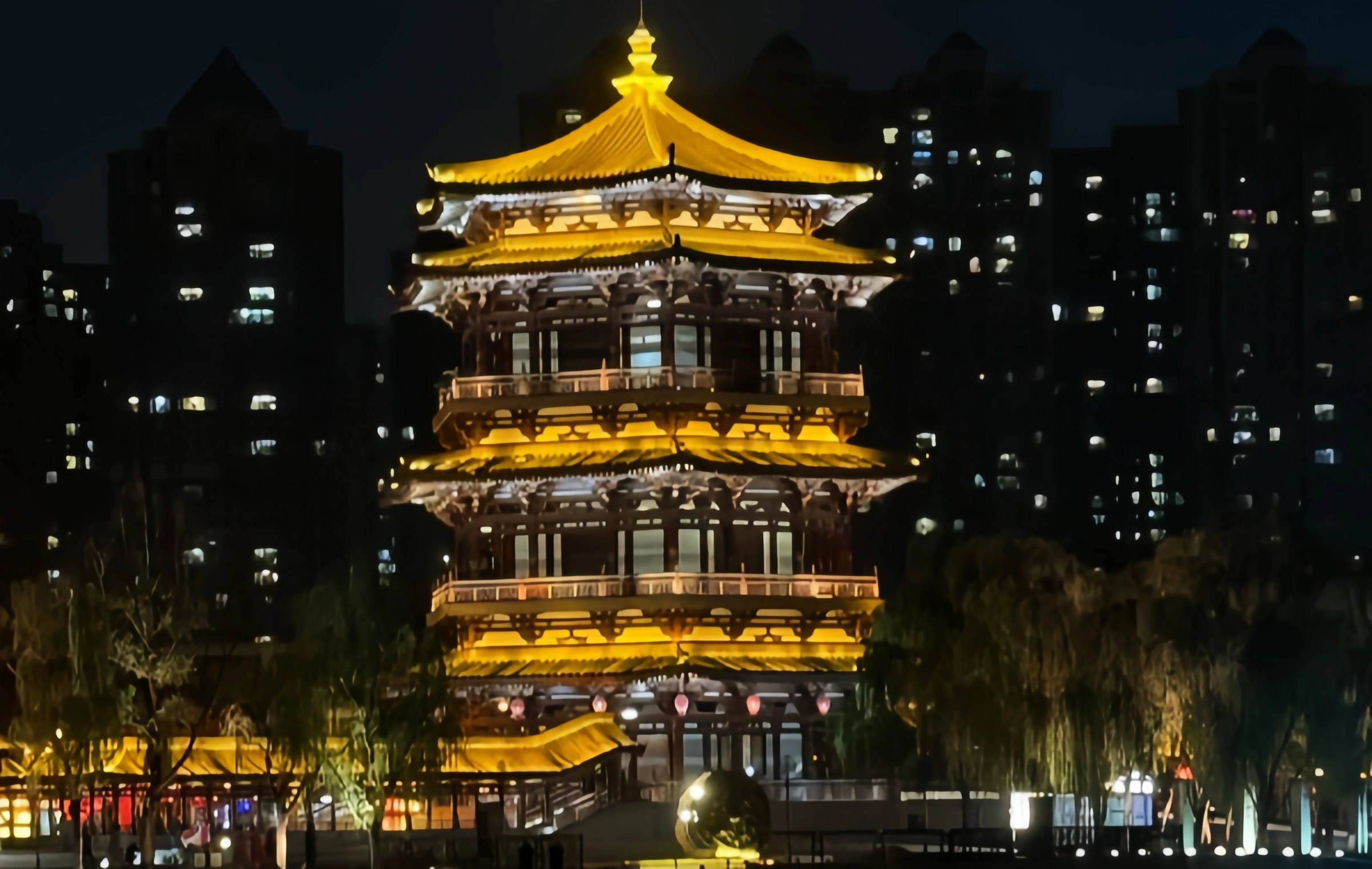
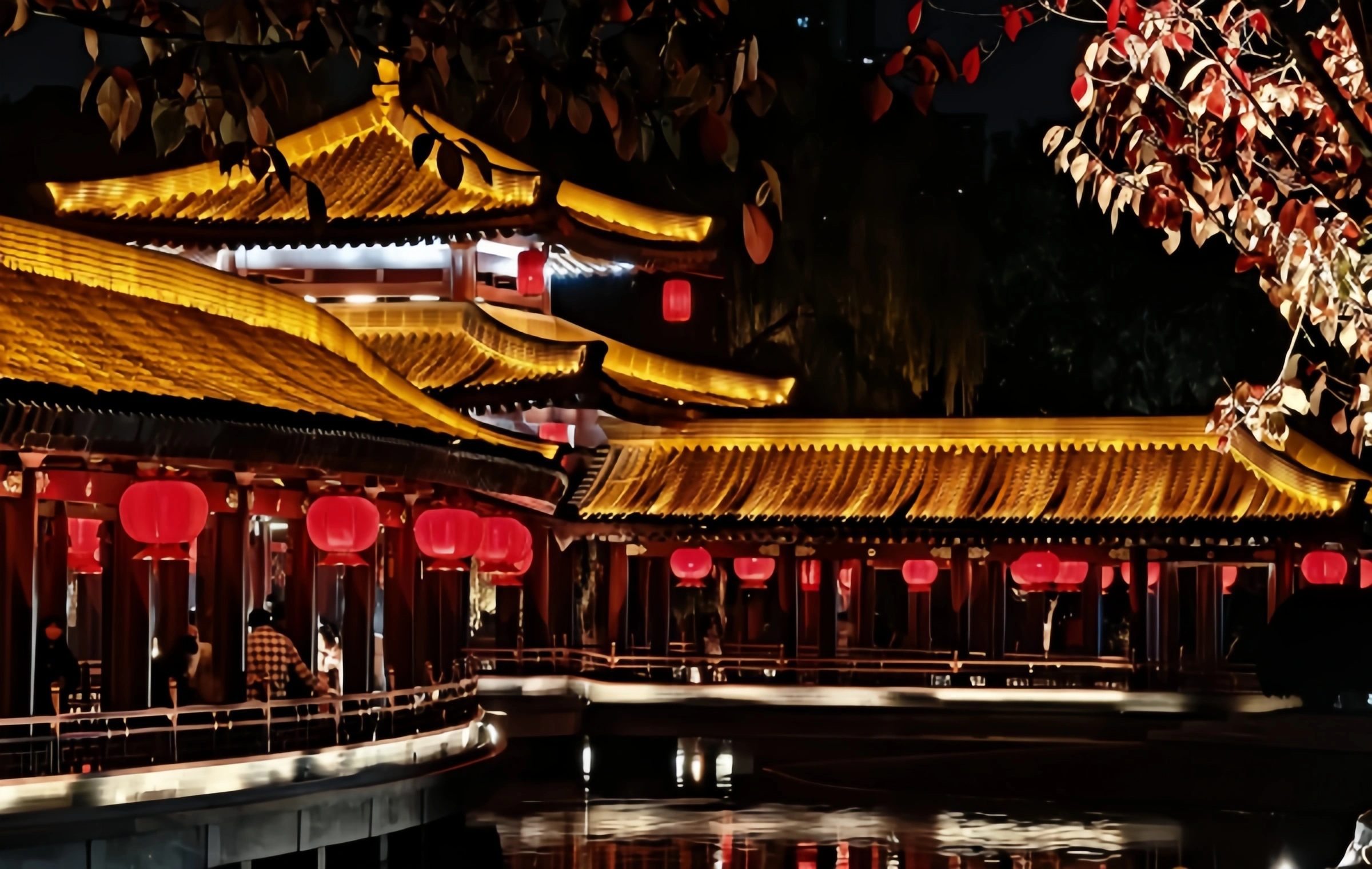
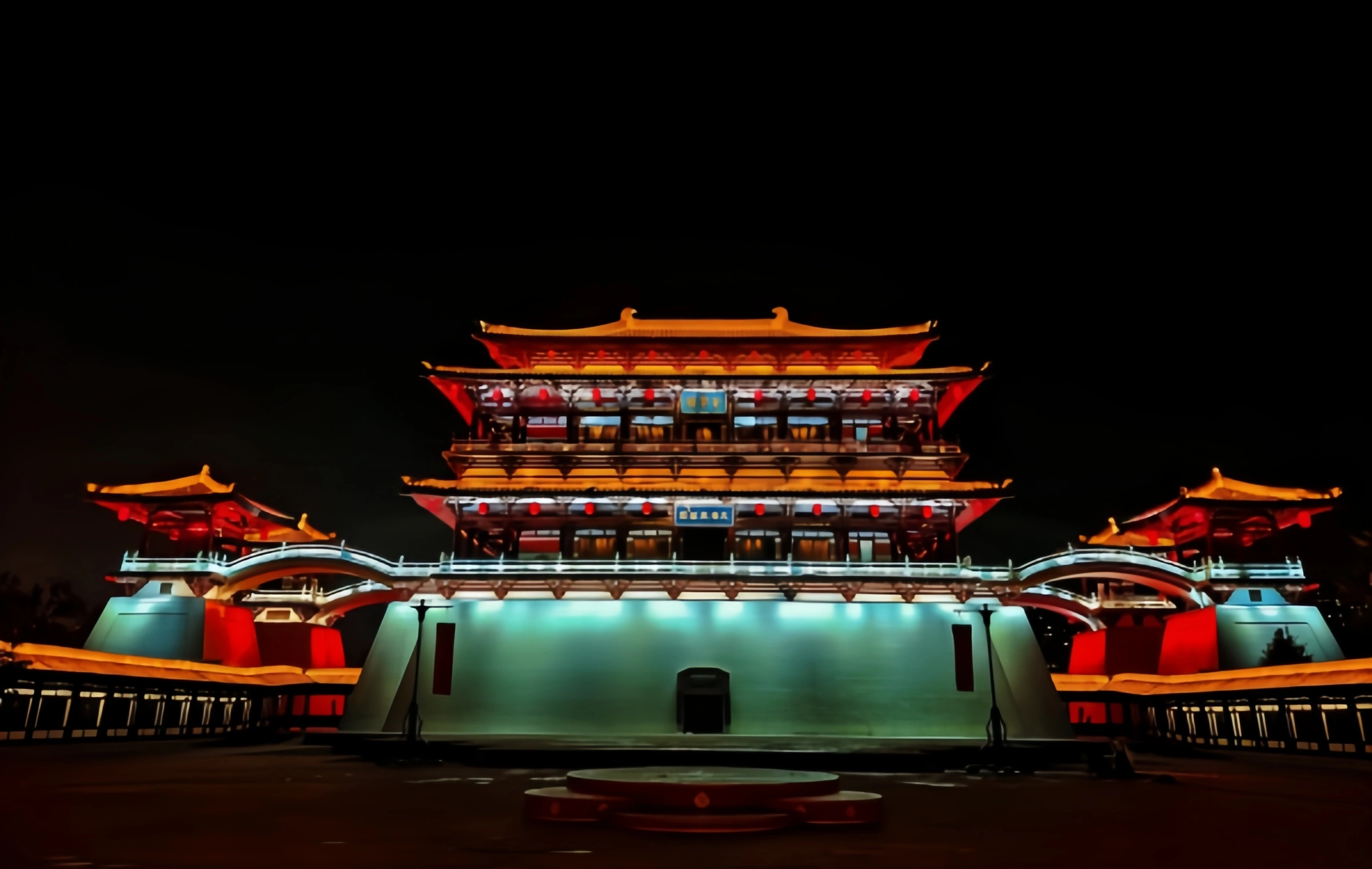
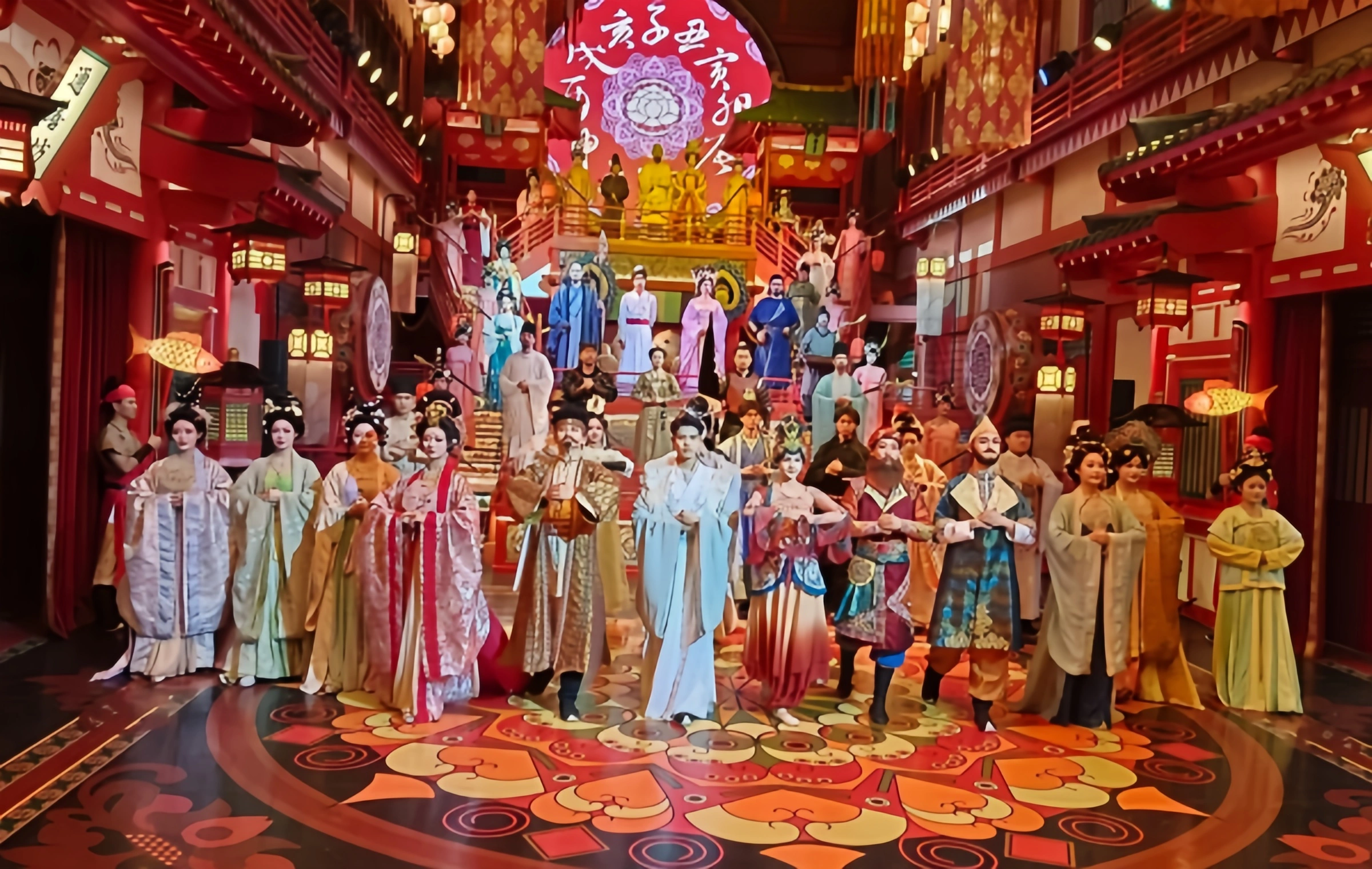
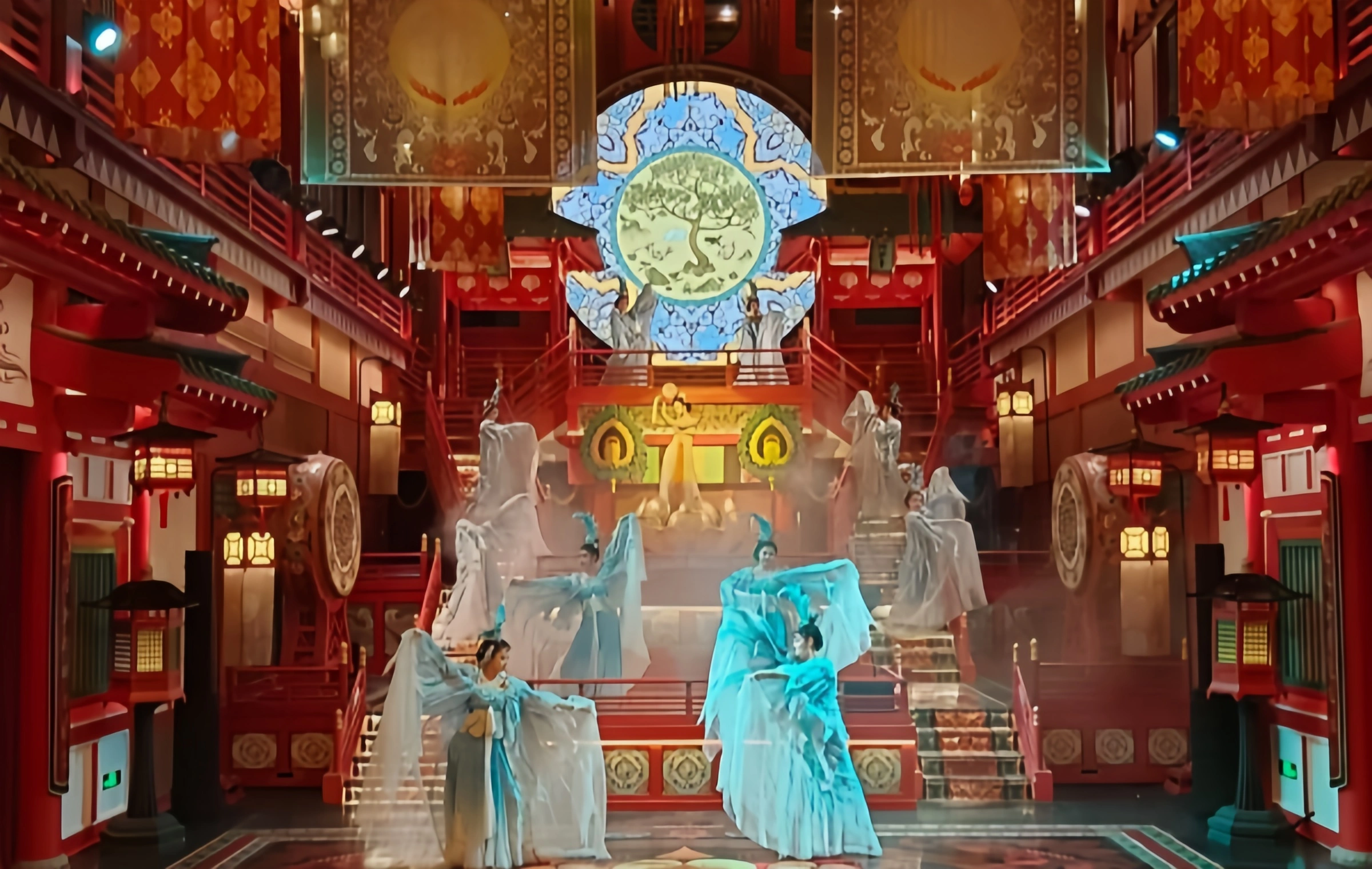
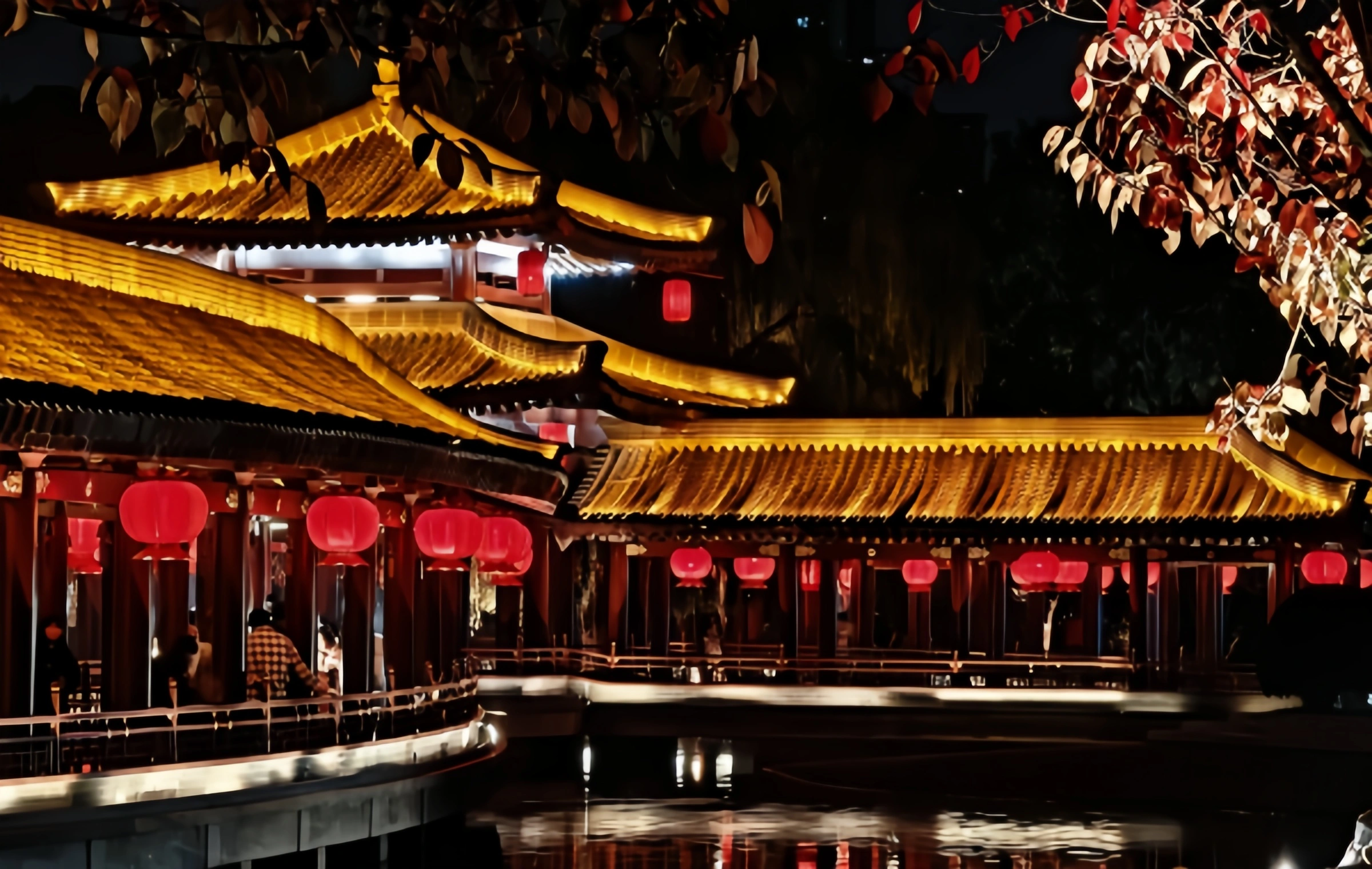
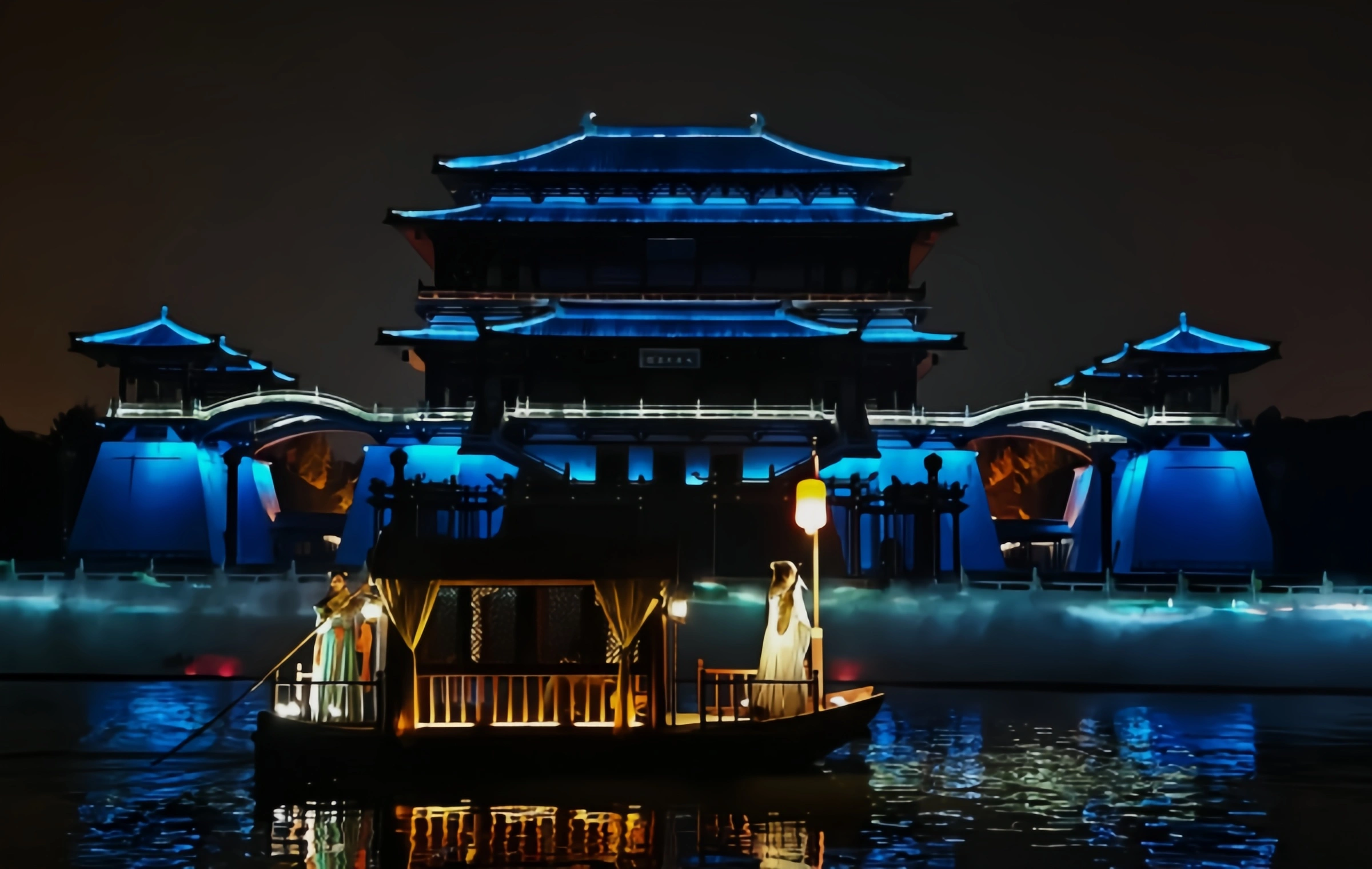
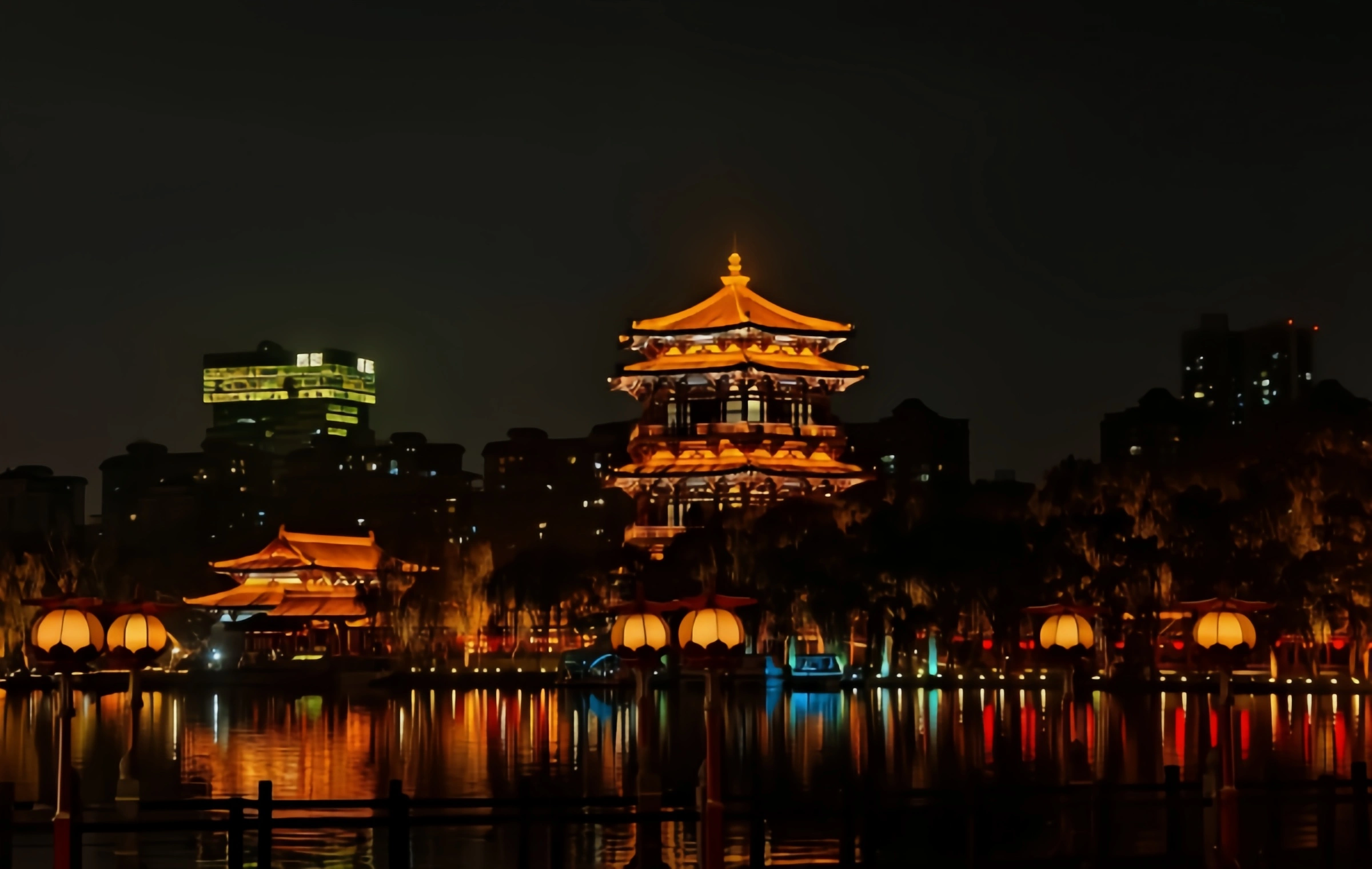
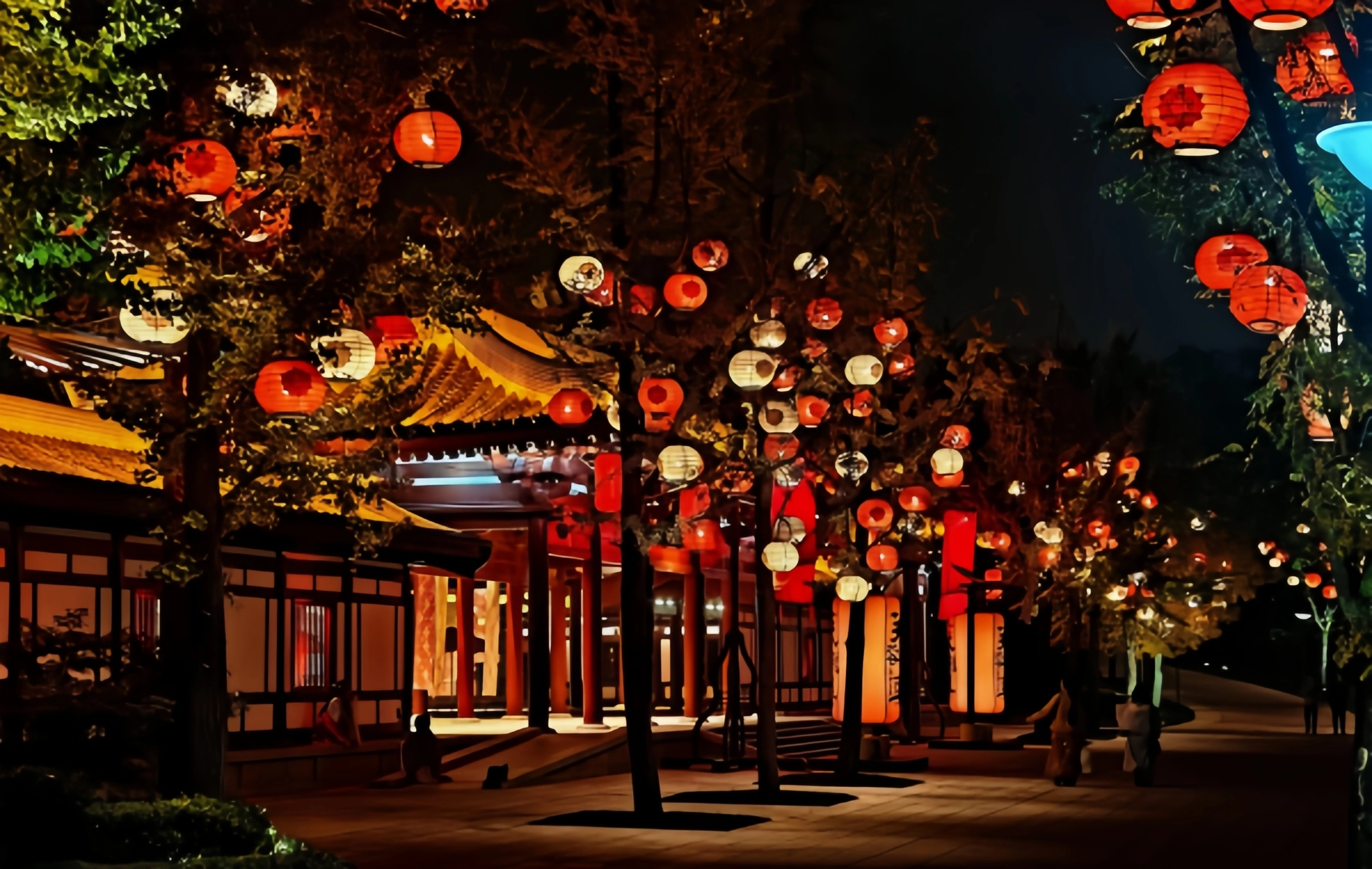
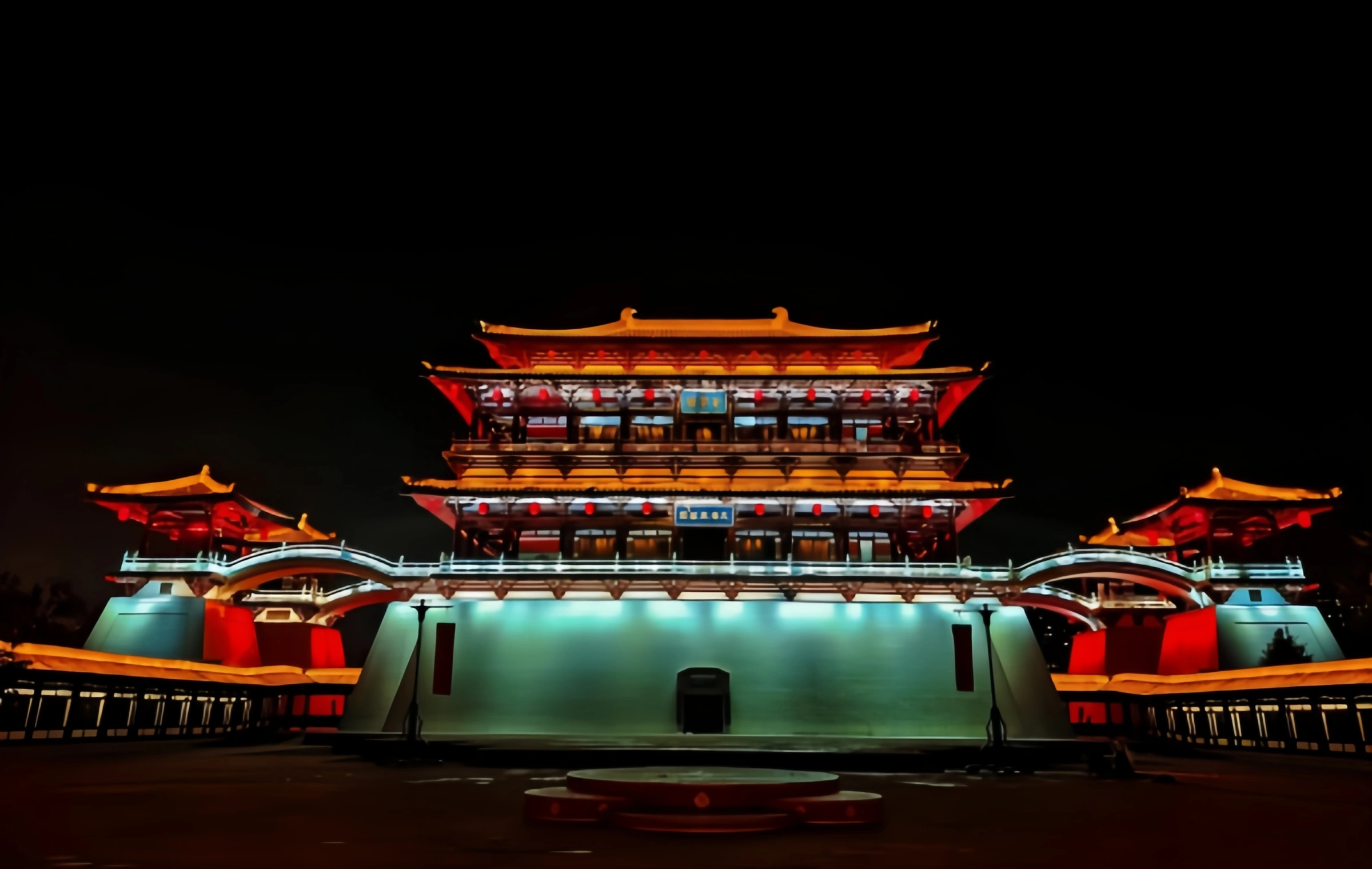
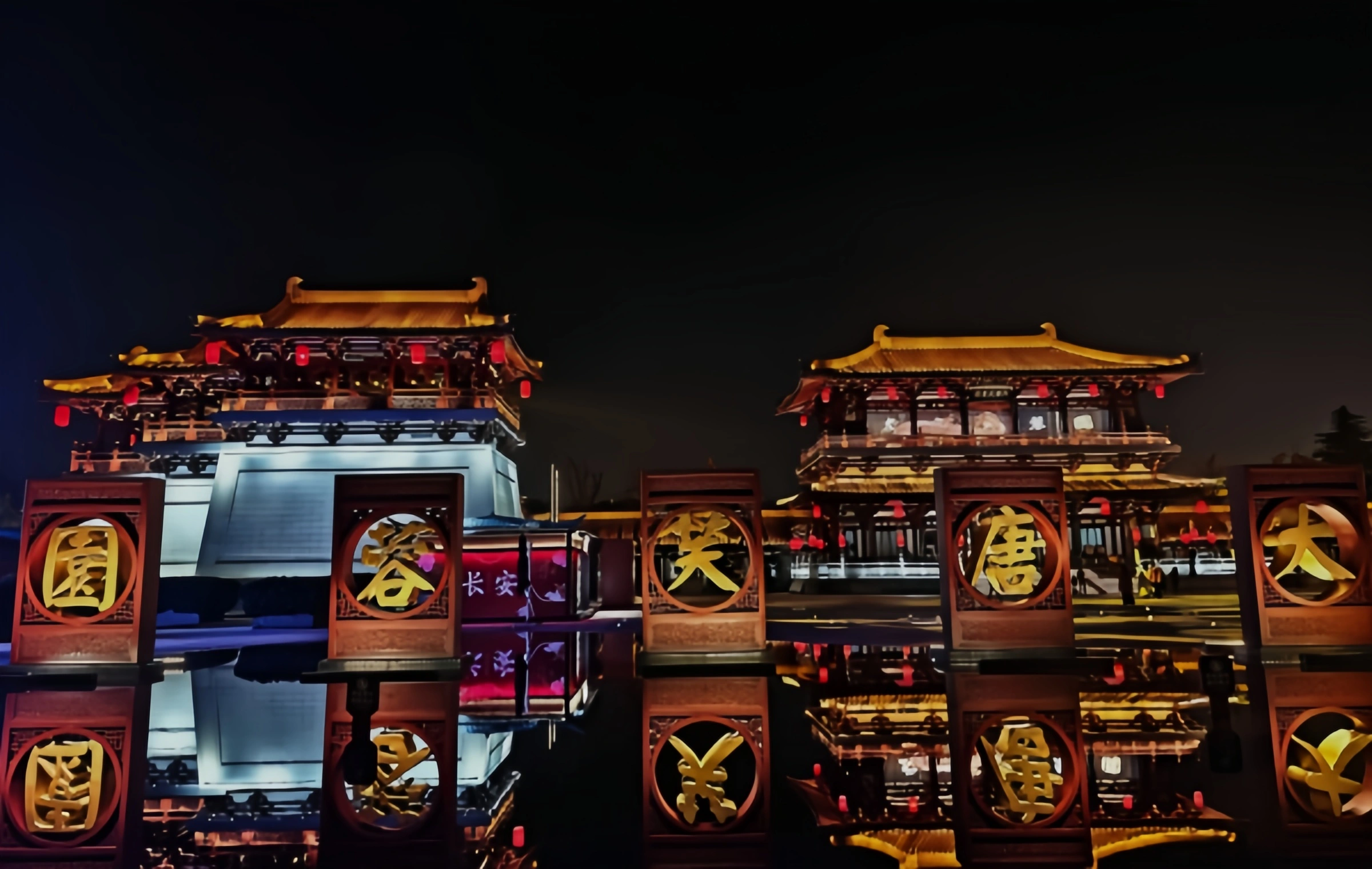
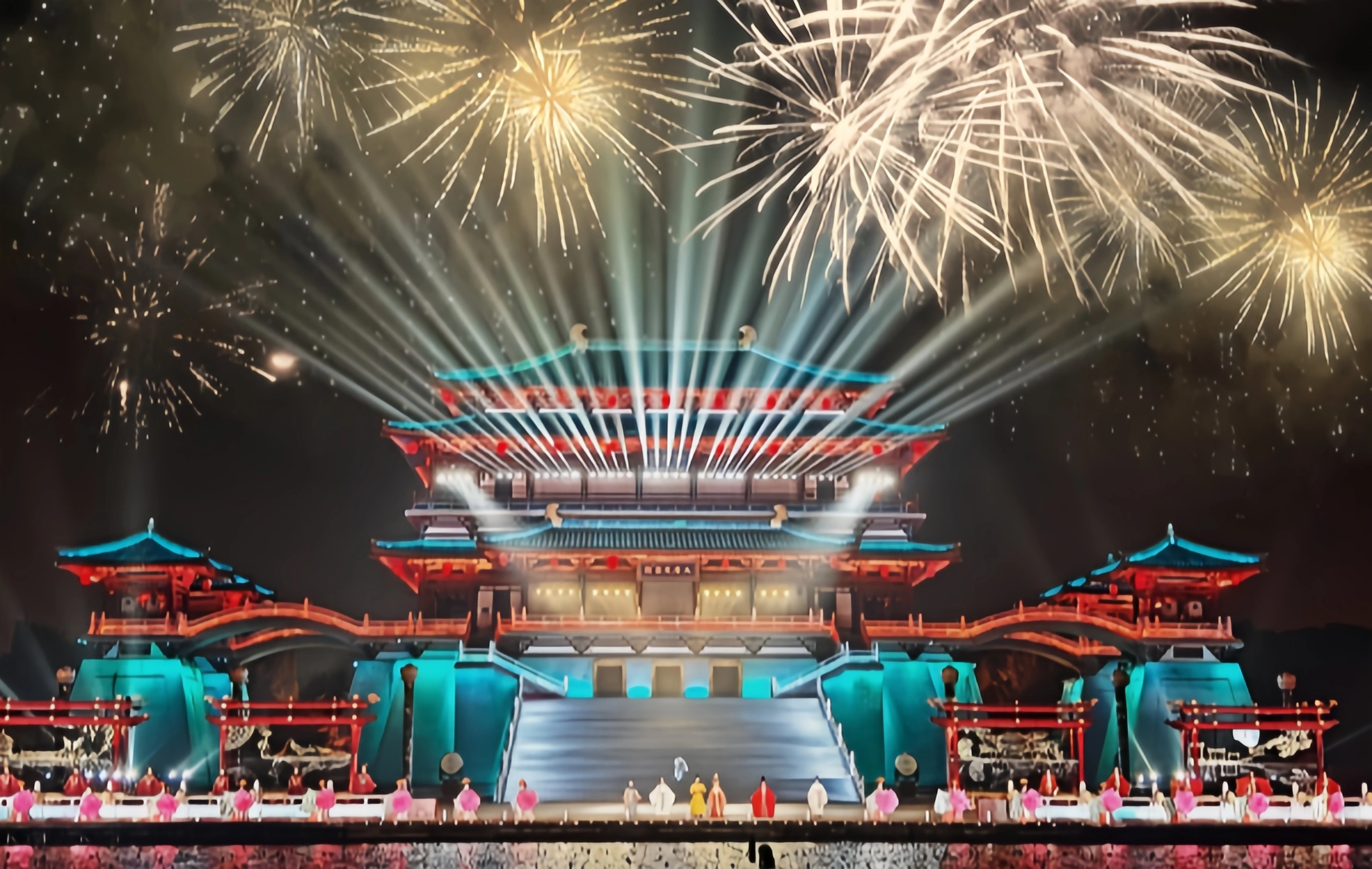
The landscape of Tang Dynasty Furong Garden is a comprehensive art about architecture, water scenery, poetry and painting, and artistic conception. Although it is centered around humanistic architecture, its exquisite layout perfectly blends with natural water bodies, garden flowers and trees, together composing a three-dimensional masterpiece of the prosperous Tang Dynasty.
Humanistic Craftsmanship - Solidified Tang Dynasty Music
Each building here is not an isolated existence, but an organic note that constitutes a panoramic view of the prosperous era.
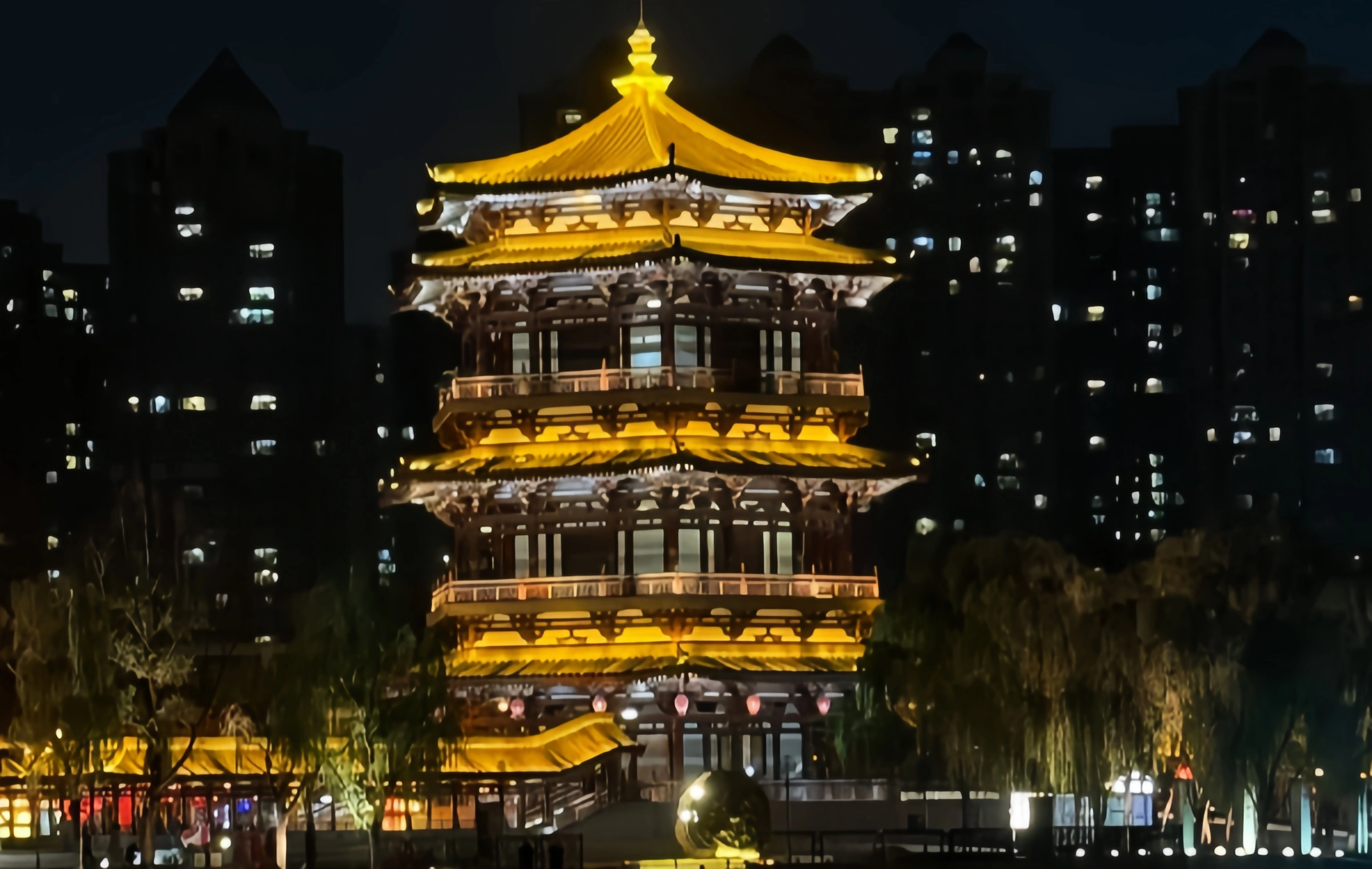
Ziyun Tower: As the spiritual symbol and commanding height of the entire garden, this main building was reconstructed strictly based on historical records, reproducing the majestic atmosphere of the emperor's visit and banquet to the courtiers in the past. Climbing up the tower and looking into the distance, you can see the misty waves of Nanhu Lake, the panoramic view of the park, and even the Giant Wild Goose Pagoda in the distance. It is the best place to experience the artistic conception of "the palace is closed in the nine heavens, and the clothes and crowns of the world worship the Mian". There is a Tang Dynasty Treasure Museum inside the building, which houses a permanent exhibition of Tang Dynasty cultural relics, allowing the architecture and cultural relics to witness each other's brilliance.
Qiting and Shixia: This is the physical carrier of Tang poetry. The "Flag Pavilion" originated from the Tang Dynasty poet's poem competition in a restaurant, and the "Poetry Gorge" connected to it displays famous poems from the "Complete Tang Poetry" in the form of calligraphy and stone carving on the rock walls of an artificial canyon. Strolling through it is like walking in a long river of poetry, engaging in a dialogue that transcends time and space with literary giants such as Li Bai, Du Fu, and Wang Wei.
Lu Yu Tea House and Li Ren Xing Group Sculpture: Lu Yu Tea House is an exquisite Tang Dynasty tea culture experience space, where you can enjoy tea and experience the elegance of Tang Dynasty's "Tea Zen flavor". The group sculpture of "Beauty Walk" artistically reproduces the plump, confident, and colorful life scenes of women in the Tang Dynasty, and is a vivid textbook for understanding the social style of the Tang Dynasty.
Xingyuan and Qujiang Hudian: "Xingyuan" used to be a glorious place for Tang Dynasty's newly admitted scholars to hold a "flower exploration banquet", and now here you can feel the literary spirit of "spring breeze and galloping horse hooves". Qujiang Hudian "restores the urban atmosphere of the Tang Dynasty's international metropolis, where Hu merchants from the Western Regions gathered and goods were abundant, showcasing the inclusive spirit of the prosperous Tang Dynasty.
Natural Charm - Three Dimensional Presentation of Landscape Poetry and Painting
Although it is an artificial reconstruction, the extraction and reconstruction of natural elements in gardens have reached the realm of "learning from nature and surpassing it".
Qujiang Flowing Drinking and Furong Lake: The vast Furong Lake is the soul of the garden, which reproduces the artistic conception of the Tang Dynasty Qujiang Pool's "curved water flowing cup". The lake water and pavilions complement each other, forming a rich landscape hierarchy. At night, this place is a natural stage for large-scale water dance light and shadow shows such as "Chasing Dreams in the Great Tang Dynasty", with flowing lights and a dreamlike atmosphere.
Garden flowers and trees and seasonal scenery: The plant configuration in the garden is exquisite, with a large number of plants related to Tang Dynasty poetry and imagery planted. In spring, apricot blossoms bloom like snow, in summer, lotus flowers (hibiscus) stand tall on the lake, in autumn, red leaves are scattered, and in winter, pine and bamboo stand proudly in the snow. The changing seasons and different scenery perfectly embody the supreme pursuit of Chinese classical gardens, which are "created by humans, like blooming from heaven".
Wangchun Pavilion and Moonlight Mirror Platform: Wangchun Pavilion is a building built specifically to showcase the culture of women in the Tang Dynasty. Its reflection enters the water and forms a beautiful picture with the surrounding flowers and trees. The Moonlight Stage, on the other hand, stands out against the bright moon in the water at night under the light, making it an excellent location for capturing the moonlit Tang Dynasty.
Photography tips:
The best panoramic camera position is located on the third floor corridor of Ziyun Tower, which can encompass Nanhu, Wangchun Pavilion, and the distant city skyline;
At dusk, Caixia Garden is the best shooting time, with golden light shining on the roofs of Tang Dynasty buildings, shining brilliantly;
It is recommended to use warm colored lighting to create an atmosphere in front of group sculptures or lantern corridors at night;
Hanfu photography can be done in Xingyuan, Shixia, or any stone bridge to find framing and reflection, creating a sense of story.